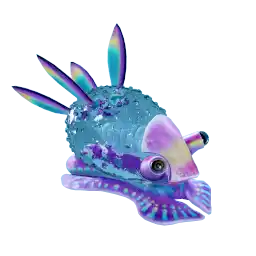
| Tidal Defense | Bio Lab | Afering Current, take nearly no damage for a while |
| Time of Day Display | Base Building | Show the time of day |
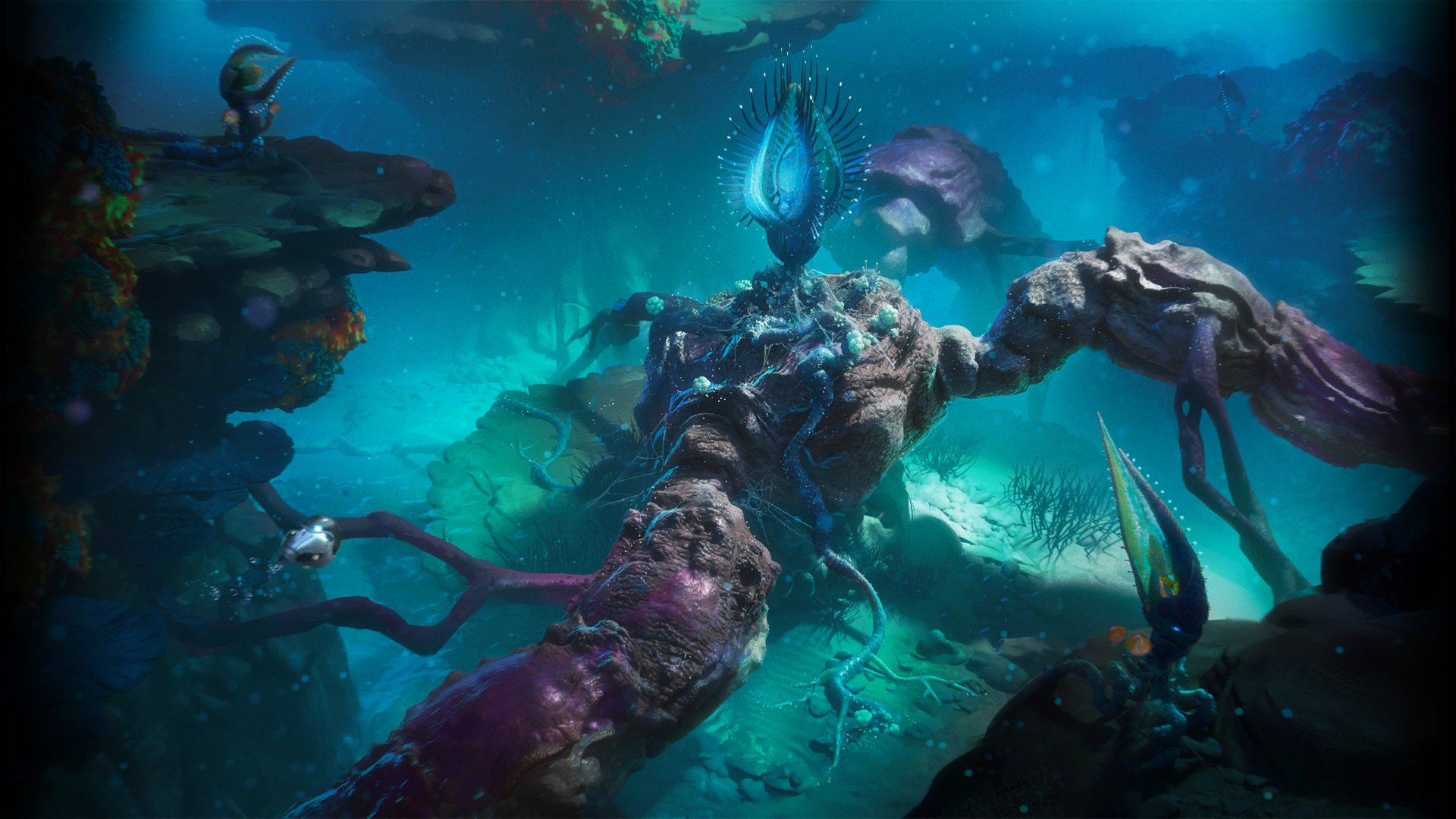
| Titan-class Organism | Investigations | The titan-class organism on the eastern horizon pushes the boundaries of planetbound life.
-Visible height exceeds two kilometers
-Visible width approaches three kilometers
-Dimensions of subsurface structure unknown
-Material properties unknown
-Ecological niche unknown
Recommend further investigation. |
| Titanium | Resources | Ti. Element 22. Ideal for underwater construction. |
| Titanium | Loose | Loose titanium deposits scattered across the seafloor may be skeletal remnants. Larger nodes are present in cave systems.
Be alert for debris to scavenge and recycle into titanium at a fabricator (or processor). |
| Titanium - Cluster Around Deposits | Loose | — |
| Titanium Generator | Bio Lab | Add 1 titanium to inventory if not already in inventory |
| Titanium Ingot | Resources | Solid mass of titanium for fabricator machining. CAS number 7440-32-6. Do not drop. |
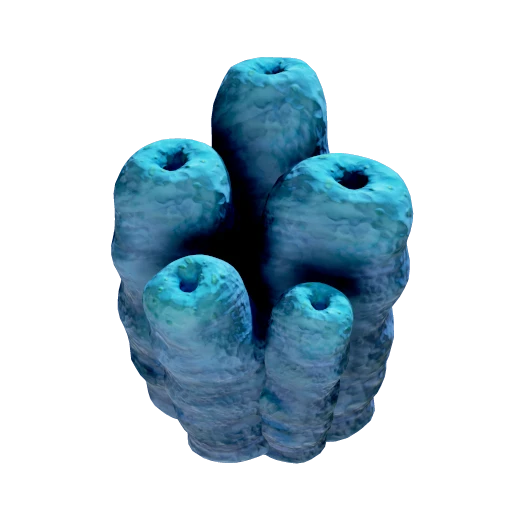
| Toxic Sponge | Bio Lab | — |
| Trashcan | Base Building | Pioneers are expected to produce no waste so this is decorative. |
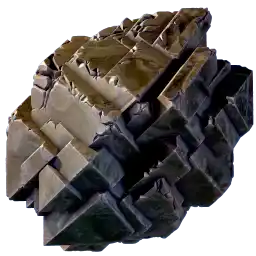
| Troilite | Resources | Iron sulfide mineral. Conductive and thermally reactive, Troilite has applications in a wide range of energy systems. |
| Tungsten | Resources | Unrefined tungsten. |
| Twin eel | Creatures | *Sitaroid gemini*, the twin ray that resembles a sitar. A dark-sea electropredator driven towards the surface by ecological disruption.
1. Sitar ray
Sitar rays, named for their resemblance to Earth's guitarfish, probably diverged from mangos less than 25 million years ago (assuming that models of evolutionary change on Proteus are correct). The flat head contains remnants of a hard shield, similar to Earth's extinct pteraspidomorphs. The jaw has moved beneath the body and rotated. Two spiracles draw water for an internal gill.
2. Deepsea origins
The twin sitar is adapted to lightless deep ocean. Its true eyes are buried in a layer of jelly below the skin. The remaining central eye is a hyperdeveloped parietal eye—an organ that tracks light and heat.
3. Twin strategy
Like the foureye, the sitar ray is always born in pairs. When mature, the twins split up to pair with mates. Unlike the foureye, the sitar ray has no specialized organ to share food or nerve impulses. The twins clasp mouthparts to exchange food. Communication is electric, similar to Earth's knifefish.
4. Electroactive feeding
Channels and ampullae along the sitar ray's body and fins contain electroplaques, modified muscles which generate electric current to stun prey. When separated, twin sitars stay connected by strands of conductive mucus. The longer this connection, the more powerful the dipole of their hunting shock.
5. Shocking behavior
Monitor sitar rays for play behavior involving metal debris or constructs.
Assessment: a serious threat to divers and to electrically powered vehicles and bases. |
| Ultra High Capacity Air Tank | Personal | Ultra-high-capacity air supply. For dives so long you'll forget you can actually drown. |
| Unobtainium | Resources | An imaginary resource that can not, does not, and will not exist, but may no longer be necessary to craft this recipe... in time. When it's less early, and there's more access. |
| Vintage Wanted poster | Base Building | A poster of an infamous criminal. May provide a transgressive sense of pride to Mongolian refugees. |
| Wakemaker | Personal | Arm-mounted jets for underwater maneuvering. Risk of shoulder strain. |
| Wall Light Large | Base Building | Create a low light environment to set the mood for your fellow colonists. |
| Wall Light Small | Base Building | Creates a small area of light on walls. Provides no Vitamin D. |
| Wall Locker | Base Building | A modest storage. Commonly used by pioneers for personal effects. 20 Storage slots. |
| Wall Panel | Base Building | Serves no practical purpose but research shows pioneers still enjoy building them. |
| Wall Rack | Base Building | Wall attachment to hold one item. |
| Wall Unit | Base Building | Decorative wall unit for interior or exterior use. Useful for expressive pioneers. |
| Wall Unit Small | Base Building | Decorative small wall unit for interior or exterior use. For modest pioneers. |
| Wall Vent | Base Building | Decorative wall vent for interior or exterior use. Just like pioneers had back home. |
| Wall Vent Large | Base Building | Decorative large wall vent for interior or exterior use. Rich pioneers show it with such splendor. |
| Wander | Investigations | K. "Wander" Wangmo was attacked by a marrowbreach while investigating a viral bloom around an angel comb.
-Wander reported a parasite attached to the marrowbreach
-Wander regretted not using flares to distract her attacker
-Wander reported that the viral bloom did not match the strain of Proteavirus detected in colonists' blood
-Concluded that the bloom virus was not responsible for Masefield syndrome
Recommend treating the viral bloom with appropriate tools. Once treated, the nearby angel combs may be a useful source of adaptations. |
| Water | Sustenance | Basic human need. Drink to avert death. Do NOT drink seawater. |
| Water Retention | Bio Lab | Gain more water from all sources with enlarged, orca-like kidneys |
| Water Secretion | Bio Lab | Slowly fills a water packet by filtering fresh water from the sea |
| Water Slug | Sustenance | Biological source of desalinated water. |
| Water Slug | Nodes | — |
| Water Slug | Bio Lab | — |
| Waxmoon | Creatures | DATABANK ENTRY COMING SOON |
| Welcome Center | Investigations | A small, flooded structure apparently intended to welcome pioneers emerging from Sleep Bay 3.
-On-site NoA node could be reactivated with a battery for data retrieval
-Biolab provides access to basic biomods |
| Wiring Kit | Consumables | Conductors, insulators and harnesses for basic electrical work. |
| Work Light | Personal | Carryable mobile light source. Requires battery to function.
|
| World Tree Relic | Base Building | Relic of the past |
| Wu | Investigations | Colony dietician Wu Lianghai drowned when his lab flooded.
-Wu was studying the virus which infects all life on Proteus
-Wu believed he had isolated a 'bloom strain' responsible for Masefield syndrome
-Wu tuned a sonic resonator device to destroy the bloom strain
Wu planned to test the resonator at a site west of Habitat where local life was infected with the bloom virus. |
| Zezura Poster | Base Building | Decorative Poster |
| Zezura poster | Base Building | A poster of your home, the barren desert world of Zezura. |
| Zip | Investigations | Lead salvor Tziporah "Zip" Malk fell into a trance and drowned near a titan rockbore.
-Zip was affected by Masefield syndrome, causing delusions and narcosis
-Other colonists in the cave were also overcome
-Blackbox contained high-level access codes to the Tadpole Pens
Recommend locating the Tadpole Pens and accessing the control room. |