


Subnautica 2 Creatures
Add to Favorites
Ongoing Refinement: We are continuously updating the database throughout the Early Access period. Some icons and descriptions may be placeholders as the game evolves.
Subnautica 2 Creatures Database List
| Type | Description | Tunables | ||
|---|---|---|---|---|
 | Armored fish | Creatures | Fish with hard, mineralized or plasticized armor. May cover some or all of the body. Associated with territorial behavior. Dangerous to humans, perhaps more so than predators: akin to Earthly hippopotami or rhinoceroses. Known armored fish (such as the hammerhead) are highly divergent from other fish (such as the halfmoon), with different body plans, jaw structures, and sense organ layouts. This suggests an early split in their evolutionary history. Earth analog: placoderms (extinct). | |
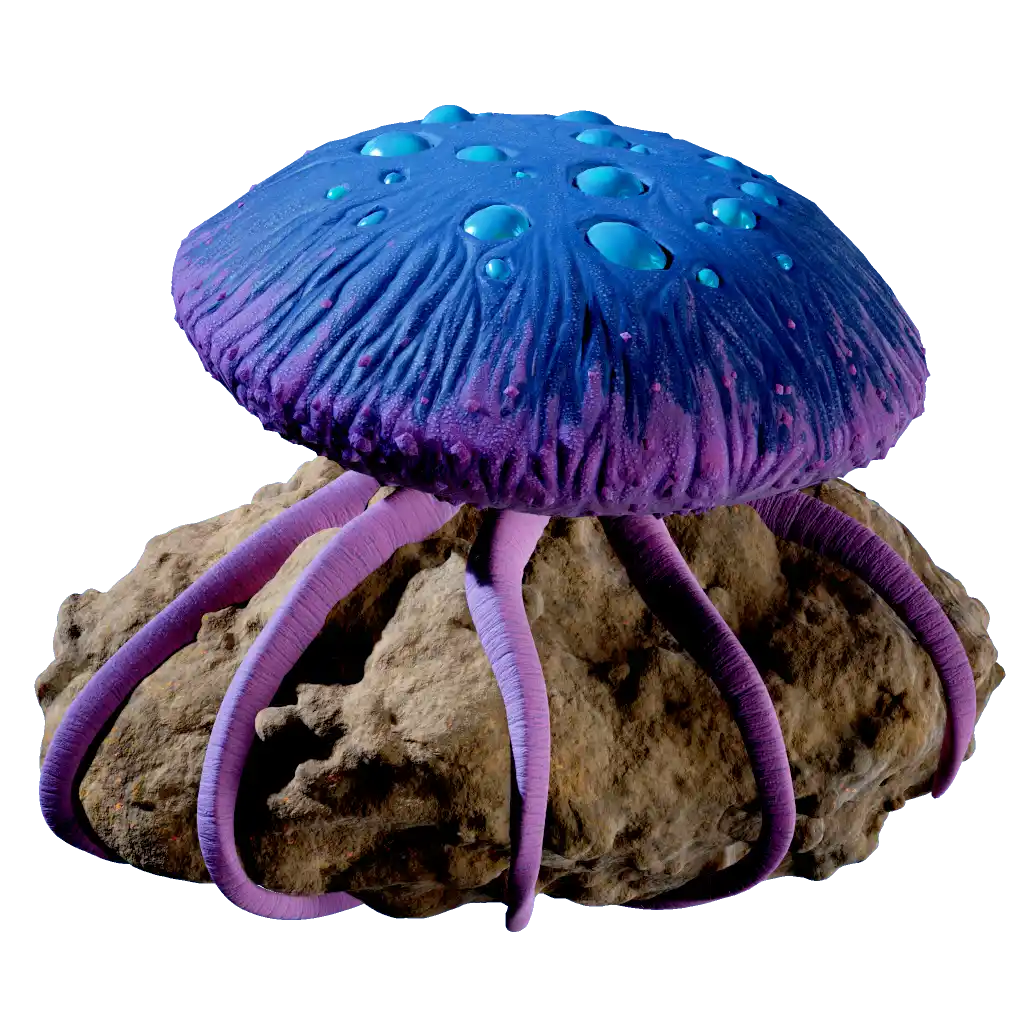 | BFJ | Creatures | *Dactylbrachia gigas*, the behemoth finger-legged jelly. A massive specimen with no Earthly analog. 1. Jellylike body plan Even the largest terrestrial jellies are anatomically simple, with a gelatinous bell, a central stomach, and tentacles. By contrast, the BFJ (an acronym for Behemoth Finger-Legged Jelly) has complex organs and a sophisticated nervous system. 2. Gas bladders Most of the BFJ's volume is occupied by gas bladders, controlled by a net of distributed nerves that automatically regulate buoyancy. Sedentary BFJs resting on the seafloor flood their gas bladders with seawater. 3. Multiple eyespot The BFJ's eyes are differentiated into small, sharp-focus eyes and large wide-field arrays. They focus exclusively upward. Fine muscles in the rhopalia (eye clusters) can adjust the eye to focus through different classes of seawater and even air — suggesting the BFJ spends time at the surface of the sea. 4. Muscular arms Unlike the trailing tentacles of most jellies, the BFJ's arms are muscular hydrostats like squid arms. Covered in finely developed sensory hairs, they do not seem to be used for predation. Instead, they seek out chemical resources in the seafloor. Methane-sensing organs are particularly dense at the tips of the arms. 5. Exhaustion The index BFJ scanned by the user seems to be feeding on sunlight while awaiting an unknown future state in its life cycle. Assessment: possibly the sea-bound state of an airborne organism. | |
 | Black Hoverthorn | Creatures | Edible though insubstantial fish. Difficult to grip due to its unique electromagnetic propulsion. | Food: 15Raw Food: 1Water: -5 |
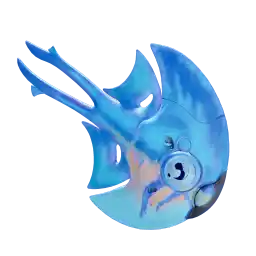 | Bluemoon | Creatures | *Moliform semiluna* subspecies or morph. Blue. | Food: 10Raw Food: 1Water: 5 |
 | Bullethead | Creatures | *Panopliateuthis velos*, the armored squid dart. A swarm predator that attacks by ramming and penetrating its prey. Capable of *Caught script hook in allocated memory for command >> generate-databank "Bullethead" >> echo \memory-carve -signature=0xSEABEEF5 >> restore-databank* "I saw their eyes first. Bright yellow eyes, down the inside of the lava tube. I killed the motors and the floods, signaled Iso and Mel to grab the handholds, and held my breath. For a minute I thought we'd ride clean through. Then the current pulled the Tadpole into an outcrop and at the sound they all just—went off. Like bottle rockets. Back and forth, up and down, everywhere. One of them lodged in the port hull just aft of the canopy and I saw, very clearly, that it was a squid, completely plated in armor. They hit you tail first, hard enough to punch into titanium. Incredible. Do you think they run on compressed air? Or do they burn something? The hull alarm went off — I tried to blink the floods to confuse them — but Mel and Iso's blackboxes were already crying. The noise seemed to attract them. Apparently they like to get stuck in wounded prey and wait until you bleed to death, then go to work on your carcass. So by the time I got back to Habitat there wasn't much left of Iso and Mel for Iso and Mel to recycle." —Tsewangiin "Ruby" Anar, "When I Didn't Die" | |
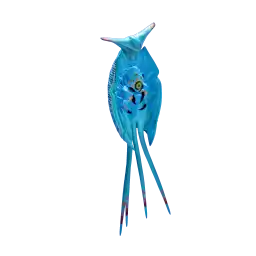 | Cerathecan | Creatures | *Caught script hook in allocated memory for command >> generate-databank "Cerathecan" >> echo \memory-carve -signature=0xSEABEEF5 >> restore-databank* "Our PDAs point to organisms like the cerathecan and exclaim 'behold: the road not taken'. On Earth, seed shrimp are tiny slime-dwellers; on Proteus they grow huge. But just as easy life in our decontaminated bases deafens us to the call of Proteus, easy analogies blind us to the truth. The map from Earth is not only wrong, so is its basic dogma. Evolution does not follow roads here." —Anita Gottschall, *The Way Away Home* *Exile cerathecan*, the horn-cupped exile. A mysterious carnivore and deposit feeder with no clear Earth analog except the tiny ostracod (seed shrimp). 1. Exile A crustacean hidden in an upright, double-valved shell, similar to an oyster or clam. The crustacean pilots the shell through a central eye and periscopic ears, and feeds with a cluster of basal tentacles. A thruster in the shell's hinge (a region called the umbo) propels it forward. 2. Behavior and diet The cerathecan grazes on the seafloor, plucking detritus and prey from hiding places. To protect the cerathecan's body from struggling prey, the interior of the shell is lined with a paralytic neurotoxin. The cerathecan's shell muscles are themselves paralyzed by this toxin — it cannot open without secreting an antidote. 3. Perplexing genetics There are no genes in the cerathecan's genome to produce a shell. Genetically, the cerathecan is simply a large shrimp. The shell tissues contain a partial genome, without organs to sustain an independent life. Further investigation required. Assessment: cryptic origins. The inner shell can be sampled for chemistry when it opens to feed. | |
 | Collector Leviathan | Creatures | Enormous cephalopod predator (tentatively *Tyrannoteuthis phobocoeus*, tyrant squid of fearful curiosity). Feeds on hard-shelled, heavily defended prey. Solitary but highly intelligent. Likely a deep-sea creature. 1. Squidlike body plan The collector's body converges with Earth squid — a long mantle and several limbs attached directly to the head. The mantle is covered in plastic armor. Unlike Earth squid, the collector has four long hunting tentacles with dextrous claws. Its eight arms are small and grouped around the beak. 2. Powerful thruster Two large spiracles feed a rear-facing thruster. These spiracles are separate from the four gills openings on the head, allowing the collector to separate its breath rate from its thrust speed. Two secondary hearts pump blood from the gills to the main heart. 3. Hard prey An enormous beak (capable of tearing through plate titanium) and four dextrous tentacles tipped with sharp bioglass claws imply that the collector specializes in prying or tearing open heavily armored prey. Possible prey fauna include the coral crab and great jaw. The need to defeat armored, active prey may have evolved a curious and aggressive psychology. 4. Broadcast organ This huge, many-chambered organ is a biological phased-array sonar. Multiple 'speakers' and 'ears' allow the collector to broadcast complex multi-part pulses. Dense innervation connects this organ to the toroidal brain; patterns of bioluminescence may be direct reflections of the collector's brain activity. 5. W-shaped pupil In bright light the pupil creases into a W. This trait was present in Earth cephalopods, but its function was not determined before the Holocene collapse. 6. Abyssal gigantism Organisms from the deep sea are often very large, a phenomenon known as 'abyssal gigantism'. Assessment: hunters with varied and difficult diets are likely to be intelligent and inquisitive, and a predator's curiosity may appear to prey as arbitrary torture. Any small submersible or habitat is likely to draw the collector's interest. | |
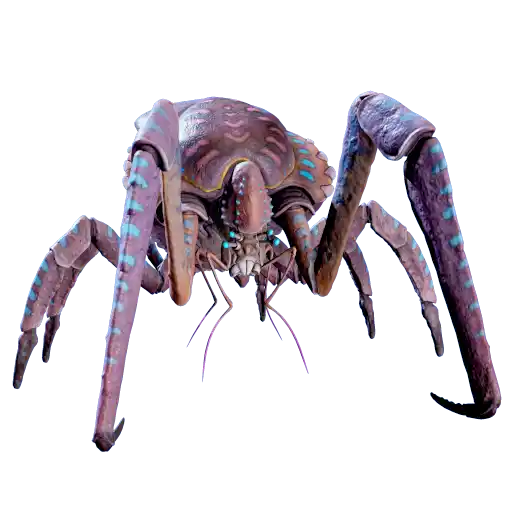 | Coral Crab | Creatures | An enormous crab (tentatively *Ostrakonskelos anaktoraphore*, hard-legged palace-bearer) that hides among coral domes. 1. Crablike body plan Forelimbs rake and dig for food which is collected by long soft maxillipeds (food handling limbs) around the mouth. The crab must molt to grow. 2. Coral dome A living coral dome, cut from its holdfast and worn. It provides camouflage, protection, and perhaps a nursery for the crab’s young. Are they married to a single dome, or are domes traded as they grow? 3. Implicit predator Defenses and behavior imply the existence of a predator powerful and dextrous enough to shuck the crab from its dome and crack its heavy armor. 4. Viral activity Genome contains large repeated retroviral inserts, including nerve growth factors and shell pigments. Molecular clock suggests they were recent introductions. Cells on the crab’s back contain large segments of the coral dome polyp’s genome. 5. Large brains The coral crab has no spinal nerve braid. A large brain above the eyes manages senses and behavior planning, while a secondary nerve cluster controls the legs and digestive system. 6. Seafloor communication Coral crabs drum on the seafloor to signal to each other. Claw-clacking is likely a sign of intense excitement or agitation. Some Earth crabs seek desirable partners to pair with prior to molting, a behavior known as ‘handholding’. Finding a similar behavior on this world may be emotionally rewarding. 7. Signs of ecological stress Mineral deficiencies and fungal infections imply environmental stressors. Assessment: likely fears you more than you fear it. Be cautious and respectful. At least as intelligent as a gorilla. Possibly a useful source of seabed resources. Research proposal: determine whether the crab carries its dome to sunny or nutrient-rich areas for feeding. | |
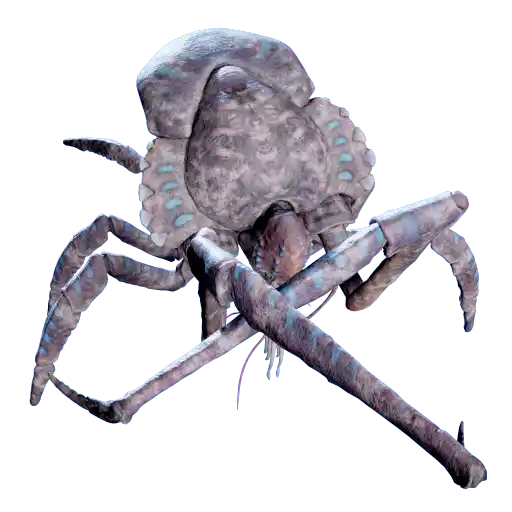 | Dead Coral Crab | Creatures | The remains of a large crustacean (dead) and a coral dome (bleached, dead). The crab may have used the dome as a portable shelter. | |
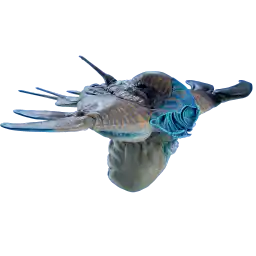 | Deepwing Brooder | Creatures | *Titanotagmatapterya amalthea*, the titanic wing-segmented cup of plenty. An enormous arthropod leviathan with a huge tearing beak and a payload of fatty deposits, which it uses to both feed and protect its eggs. 1. Ancient origins The brooder's ancestors, the tagmatapterya (wing-segmented ones), evolved very early in the development of Protean arthropods. Their limbs evolved into paddles, the thorax developed a deep keel, and maxillipeds beneath the mouth transformed into eyes by homeosis. Competition from fish selected for enormous size and thick armor. It is unknown if all the tagmatapterya achieved the deepwing brooder's enormous size, or even surpassed it. 2. Mysterious diet The deepwing brooder's throat is lined with traps for plankton. Filtered water through gill openings at the rear of its thoracic keel. Yet its enormous beak is suited to cracking and tearing. It is possible that the brooder opportunistically feeds on hard prey, including the fluids of titan rockbores, the shells of giant jaws, and fatbergs drifting through the lipid-rich Protean sea. 3. Fertile brooding Deepwing brooders gather layers of oil beneath their outer shell. This oil is released in droplets alongside eggs, acting as a decoy for predators.The decoy eggs do provide the ocean with a tremendous bounty of concentrated nutrients. 4. Deepfall As a strandulate, the deepwing brooder must molt. Molted exoskeletons drop to the sea floor with a lining of lipid-rich grease, providing a feast for dwellers in the hungry abyss. Assessment: egg broods provide a valuable food supply, if you can locate the true eggs — and survive the competition. | |
 | Deepwing Egg Clump | Creatures | Unfertilized deepwing roe. Miraculous source of bioavailable nutrients and hydration. The clump swiftly dissolves in seawater. Possible ecological function. | Food: 40Water: 40 |
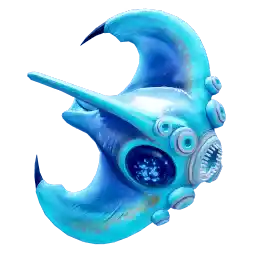 | Electric Geordie | Creatures | Full of electrolytes. | Food: 20Health: -10Raw Food: 5 |
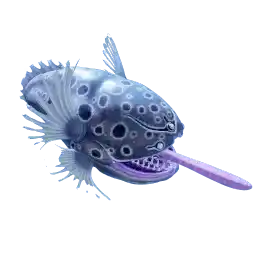 | Epicurean | Creatures | *Postpanoplia epicurean*, the voracious unarmored armored fish. Unpredictable and hungry, especially when under the influence of a parasite. 1. Sea hippo The epicurean is a true omnivore, consuming dozens of kilograms of animals, microorganisms, minerals and corals every day. Digesting this diet is expensive, fueling the epicurean's hunger. By devouring and defecating, the epicurean spreads nutrients and fine-ground sand, making it a keystone species in its ecosystem. 2. Lobe-finned enormity The epicurean is a younger relative of the hammerhead, but it has lost its armored shield, allowing it to open its huge grinding jaw. Both the central pineal eye and the lateral eyes are fully developed. These changes suggest the epicurean no longer competes in tournaments for territory and mates. 3. Hunger The hungrier the epicurean, the more likely it is to attack a pioneer. 4. Parasite The epicurean often swallows parasites with its food, which take root in its mouth, blocking nerve pathways which signal fullness to the epicurean's brain. Infested epicureans believe they are starving, and attack with ravenous hunger. Explore methods to expel the parasite, and try to avoid becoming an unsatisfying meal. Assessment: ecologically vital but an unpredictable danger to divers. Check for and (if possible) expel mouth parasites. | |
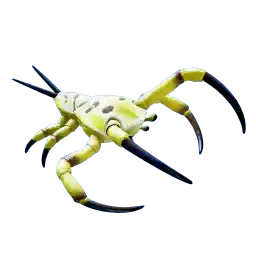 | Epicurean Symbiote | Creatures | *Ostrakonskelos glossaklept*, the hard-legged tongue thief. A parasitic crab or louse that dwells in the mouth, causing intense and unremitting hunger. 1. Crablike body plan A close relative of other Protean crabs, belonging to the infraorder Adulati. The segmented body has two cerci, nerve-rich organs which evolved from legs. The mouthparts are simple. The tongue thief relies on its host to chew food. 2. Parasitic hijack Tongue thieves mimic other prey species until swallowed, then use a numbing agent to paralyze the predator's jaw long enough to anchor to the tongue. This numbing agent blocks the nerves that signal satiety (fullness) to the brain. 3. Semi-cooperative hunting Although they are parasites, tongue thieves' small eyes and grasping limbs help the host latch onto food. 4. Reproduction Tongue thieves anchor eggs or spermatophores in the mouth of their host, where they wait for a thief of the opposite sex to arrive. Infant tongue thieves (called manca) pass through the host's digestive tract. 5. Possible cultural function In the same way some human cultures use capsaicin in food, it is conceivable that other organisms might develop a taste for the tongue thief's numibng agent. Personal experimentation would be ill-advised. Assessment: expel parasite to reduce host hunger. Be alert for juveniles who may attempt to infest your mouth. | |
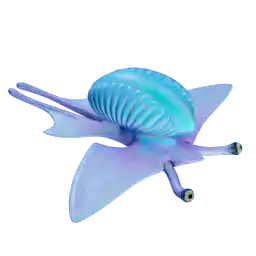 | Flash Fish | Creatures | *Seaslug kleptopharos*, the stolen beacon slug. A free-swimming, luminescent relative of the waterslug with chimeric traits from another species entirely. 1. Microbial photocell The flash slug is powered by the same type of microbial fuel cell present in the waterslug. The slug inhales plankton as it swims, which it digests with photodecomposition and feeds to luminescent bacteria that live in coils of glassy fiber deep in its mantle. These fibers generate and direct bioluminescence, and may in fact be biological lasers. 2. Light control The flash slug uses its light to attract food and mates. When threatened, the slug charges up a flash of blinding coherent light to drive off attackers. Spectrogenetic analysis suggests this defense mechanism evolved from a system of internal gene regulation: its original function, millions of years ago, was to activate and deactivate genes inside the slug's body with coded light signals. 3. Raylike body plan The flash slug swims with ray-like wings that grow from its foot. CORRECTION: The first draft of this output incorrectly attributed these wings to genetic sequences transferred from a Protean ray. In fact, the wings are a development of the slug's mantle, like Earth's Spanish dancer. The shared sequences with Protean rays may be related to item 4 below. 4. Enigmatic viral traffic Millihertz variations in the slug's flash patterns appear to be correlated with Proteavirus activity inside the slug's tissues. The flash signals what the virus is doing — but also triggers changes in viral activity in other slugs (and, perhaps, other species that see the flash). It is possible that the flash slug's light displays give the Proteavirus a high-speed data channel. Assessment: may provide a useful deterrent against predators if gripped. Close eyes to avoid damage. | Food: 20Raw Food: 1Health: -10 |
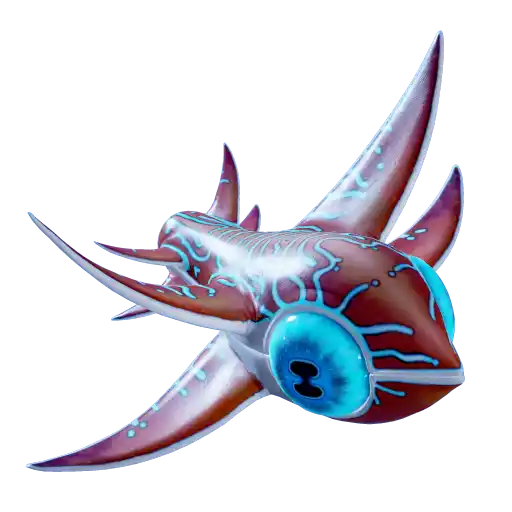 | Four Eye | Creatures | Foureye (*Morokotoform duplex*). A predatory fish always born in pairs of identical twins. The twins pair belly-to-belly, joining their digestive and nervous systems to behave as a single organism. 1. Predatory individual The individual "two-eye" is convergent with Earth fish. Large, mobile pectoral fins are suited to quick maneuvers, not cruising. Squashed eyes offer better vision upward. Individuals feed on smaller forage fish and hard-shelled crustaceans. 2. Duplex team Two individuals pair into a complete four-eye through a pair of modified ventral fins, which have evolved into sensitive structures similar to Sol sharksuckers. (Repeating this phrase can help train vocal dexterity.) The embryonic yolk stalk grows through the forward sucker, allowing the joined pair to share nutrients. Nerve clusters in the suckers trigger each other through the skin, passing sensory data and motor commands. Separated individuals are prone to brief seizures, suggesting the nervous system is sensitive to external influence. 3. Dynamic pairing Four-eyes can unpair and repair at any time. When sexually mature, twins paired since infancy split up to seek out mating partners, forming new four-eyes. Mated pairs may be cross-sex (with the male fertilizing the female) or same-sex (with both individuals cooperating to locate a mate or mates). 4. Aggression The duplex foureye is aggressive and willing to attack even larger species. It is unclear if this is a territory-guarding strategy, a relic of some ancient group behavior, or even a form of youthful play. 5. Solitude Solitary two-eyes may be ill or in mourning. Avoid. Assessment: minor danger. Be alert for unpredictable attacks. | |
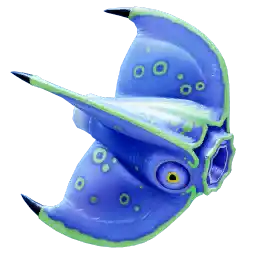 | Geordie | Creatures | *Salpapod geordie*. Jet-propelled omnivore. Not a fish. | Food: 20Raw Food: 1Health: -5 |
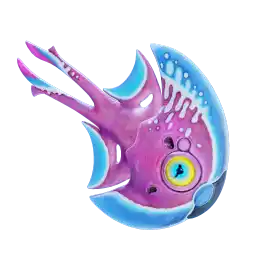 | Halfmoon | Creatures | *Moliform semiluna*. Edible forage fish. Peculiar nervous system. | Food: 15Raw Food: 1Water: -5 |
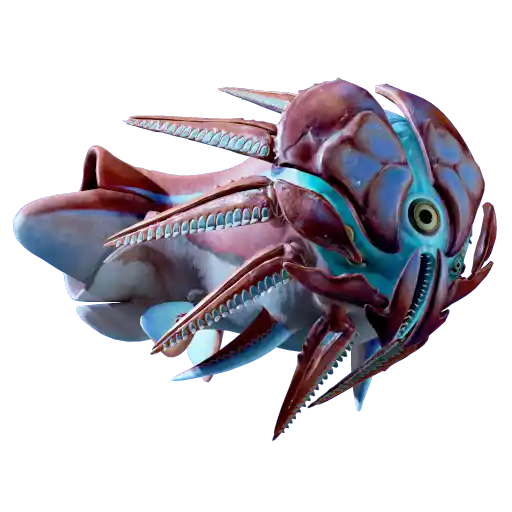 | Hammerhead | Creatures | Hammerhead (tentatively *Panoplia hammerhead*). An armored, herd-dwelling, territorial herbivore with a powerful ram. 1. Hammer head Challenges intruders on its territory, especially other hammerheads. Displays its pectoral fins and closes its enamel head shield before attacking. 2. Jet propulsion Spiracles behind the eyes feed into a jet channel with internal gills. The jet drives the hammerhead's sudden rams. 3. Large brain Floats in a protective cyst. The central eye sees color, while two smaller motion-sensitive eyes guide ramming. 4. Grazing jaw The muscular vertical jaw suggests a diet of sponges, kelps, tunicates, and possibly crushed coral. The need to protect a grazing area may have evolved the hammerhead's territoriality. 5. Practice behavior? Hammerheads ram coral domes. The adaptive benefit is unclear—perhaps toughening their shields. Advise caution, especially when piloting vehicles. May have social cognition comparable to Earth’s ungulates, some of which were extremely dangerous to humans. Ramming areas (called leks) are a major source of ocean noise. | |
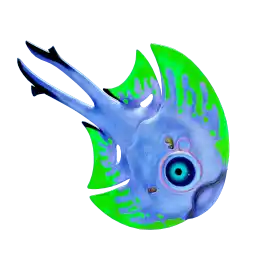 | Harvestmoon | Creatures | *Moliform semiluna* subspecies or morph. | Food: 20Raw Food: 1Water: -5 |
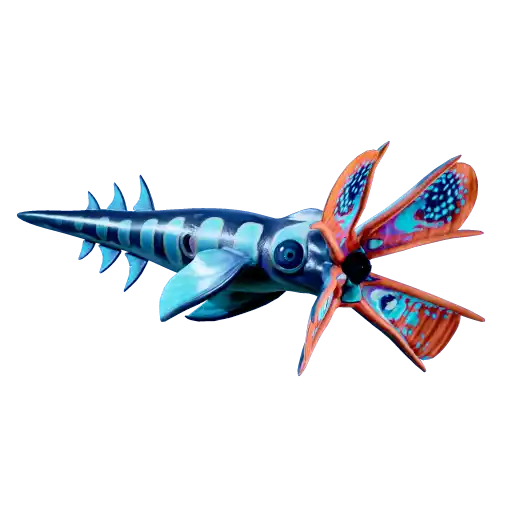 | Houndgar | Creatures | Squid-like hunter that works alongside the Marrowbreach. | |
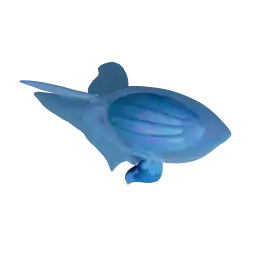 | Hycean | Creatures | *Hycean hycean*, a remarkable flying predator named for planets that mix a hydrogen sky and a water ocean. 1. Gasbag flyer Though descended from the same squidlike ancestor as the houndgar and other Protean teuthis, the hycean's mantle is full of buoyant hydrogen. The ancestral hycean probably stored ammonia for buoyancy, like many Earth squid. The hycean uses bacterial symbiotes to convert this ammonia into carbon nitride, which, when exposed to sunlight, splits seawater into oxygen and hydrogen lifting gas. 2. Predatory fisher Free of most predators, the hycean drifts above the sea surface and snags prey with its arms. The larger a hycean's gasbag, the more food it can afford to lift and digest. Large prey can be suffocated by holding them clear of the water until their gills dry out. The sails provide steerage in the wind, and can be flapped for emergency power. 3. Flammability risk Any spark may ignite the hycean's gas bag, with disastrous results. Hyceans are acutely sensitive to electromagnetic activity, and may be forced to shelter in the water during thunderstorms. 4. Philosophical musings The buena vista hypothesis (proposed by Malcolm McIver) argues that advanced cognition could only evolve when Earth fish began to raise their eyes above water, allowing them to see far enough to require long-range behavioral planning. If this hypothesis is credited, then the hycean — as one of the only discovered Protean species that lives outside water — may be unusually intelligent. Recommendation: avoid areas beneath hyceans. Monitor for signs of high-level behavior, such as 'fertilizing' certain areas of the ocean with defecated waste. | |
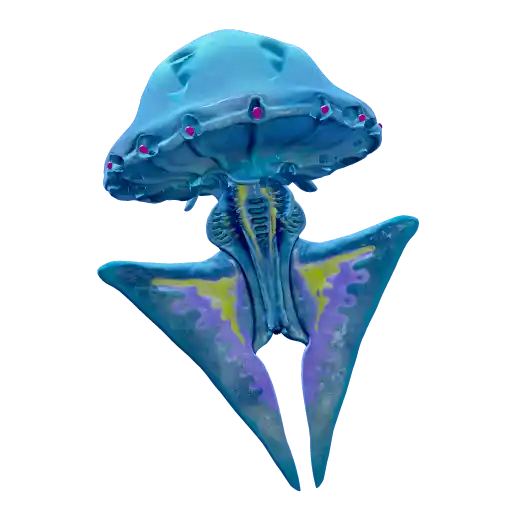 | Jellies | Creatures | A simple animal, closely related to corals, characterized by a symmetrical body and trailing arms. Usually grows in a stalked form (called the polyp) before detaching into a free-swimming form called the medusa. Some jellies remain stalked their whole lives. Mixotrophs—most are predatory, but some obtain nutrients from photosynthesis or symbiotic photosynthesizers. Nerve net—jellies predate the evolution of a nerve cord in the tunics. Complex—some jellies on this world have achieved a size and complexity unknown on Earth. Evolutionary origins unknown. Earth analog: jellies. | |
 | Jelly Ring | Creatures | Jelly ring (tentatively *Thermodont sufganiyah*, heat eating jelly donut). Not a jelly, but full of jelly. Feeds on the heat and chemical flux of hydrothermal vents. 1. Pyrosome A colony of tiny clone animals called zooids. Unlike solitary tunicates (like the lucifer rotsac), these zooid tunicates work together to build a larger structure. 2. Ring The jelly ring settles around hydrothermal vents like a wheel on an axle. When a vent dies, the jelly can migrate to a new vent by swimming. 3. Mucus baskets Flowerlike structures around the ring are mucus-lined pumps for water and hydrothermal vent flux. The pumps can be reversed to serve as swimming thrusters. They also serve as exchange sites for organisms feeding on the ring's interior jelly. 4. Inner jelly The inner toroid circulates hot, mineral-rich water pulled in by the mucus baskets. Specialized zooids digest feedwater (using symbiotic bacteria) into a latex-like sap. This jelly coagulates on contact with water, plugging holes in the ring. It is rich with complex chemistry, including sugars, starches, oils and gums. 5. Bioluminescence The zooids in the jelly ring communicate with light, rather than nerve cells. The ring is strongly bioluminescent and will react to stimuli. 6. Jellyfall Earthly jellies and pyrosomes die and fall to the sea floor, fertilizing the deeps with nutrients. Strangely, there are signs that living jelly rings travel to deep sites and expel their jelly—giving up their calories for no apparent benefit. Natural selection cannot produce behaviors which hurt the individual to help the ecosystem. (Alterra ecology experts consider theories of multi-level selection obfuscatory and counterproductive.) This may be a farming behavior, or a donation to unknown relatives on the seafloor. Assessment: may be a source of complex chemistry and even edible fats or sugars if tapped. Likely flammable in air. | |
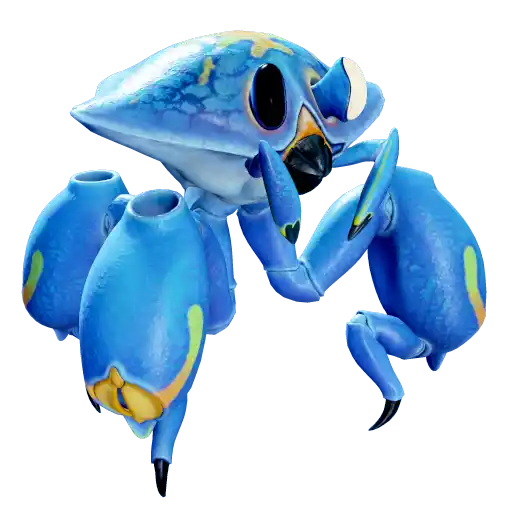 | Jeto Caris | Creatures | Jetocaris (tentatively *Tripod phrontiscaris*). A three-legged social crustacean that displays parenting behavior. 1. Tripod body plan Due to early evolution of bilateral symmetry, no three-legged organisms exist on Earth. The jetocaris’ legs may have formed from the fusion of six earlier legs, three on each side. The small forelimbs remained independent. 2. Leg jets Evolving from leg-mounted gills, a valved thruster on each leg allows the jetocaris to hover and swim. Fusing the legs to double the size of each gill-thruster improves efficiency in simulations. 3. Feeding tongues The jetocaris deploys two long, flexible radulae (perhaps evolved from food-handling maxillipeds) to search for food. The forelimbs clean and groom the radulae. These appendages are sensitive, but capable of regeneration. This suggests the jetocaris can regrow its nerves—and something in the seabed likes to bite them. 4. Parenting behavior The jetocaris carries and protects juveniles of the same species, and its expressive body language suggests a dense social life. Spectrogenetic analysis indicates that some juveniles are adopted—they are not genetic offspring of the carer. Adoption has been observed in many species: though it is a mistake from a rational adaptive standpoint. It may be a sign of instinctive behavior. Or perhaps the jetocaris once lived in eusocial groups, with a single reproductive queen producing young that were tended by workers. Assessment: mostly harmless. May provide emotional benefits. | |
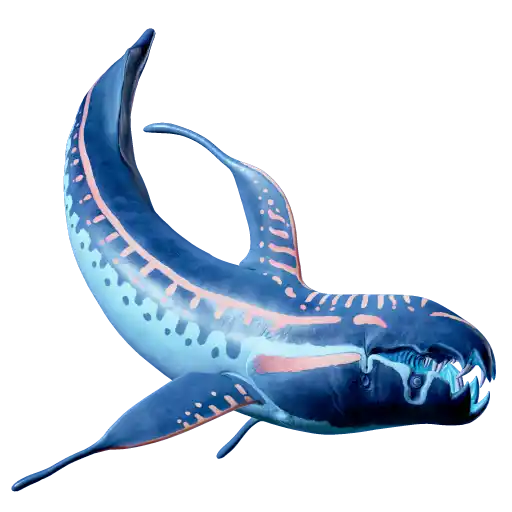 | Man-Eating Marrowbreach | Creatures | This is a large predatory organism (tentative name 'Marrowbreach''). This specimen's digestive tract contains two major anomalies: 1. Human foodstuffs in bulk 2. Digestive enzymes (such as pepsin and gastric lipase) required to digest the human diet. Origin unknown. Indigenous life cannot produce these enzymes and cannot express human proteins due to major biochemical incompatibilities (c/f Theory tab in your PDA). If this organism has the ability to digest human foodstuffs, it may also be able to digest human tissue. | |
| Marrowbreach | Creatures | *Mango marrowbreach*. Dangerous selachian predator. Selachian means sharklike. | |
 | Needler Shark | Creatures | *Mango kestros*, the dart-throwing shark. Territorial predator capable of launching uranium-tipped tusks at up to twenty meters per second. 1. Erupted jaw Dominated by six upper jaw tusk sockets. The lower jaw has receded into the throat for rasping and crushing. Muscles behind each tusk crank ligaments around hard anchors, storing mechanical energy like a crossbow. 2. Teeth battery Tusks are reloaded from mature spares deeper in the skull. Needlers constantly form new tusks by 'sneezing' ground mineral paste and quick-setting enzyme into dental sacs. Each tusk is tipped with a self-sharpening uranium oxide cap. 3. Body structure The equally spaced dorsal, pectoral and pelvic fins give the needler excellent stability and aim control. A large caudal fin drives the needler on the sprint. Like its relative the marrowbreach, it has no thruster. Four 'whiskers' detect water currents to help aim. 4. Behavior Needlers are social, nesting and sometimes hunting in family groups. They may be pack predators — cooperating to bring down larger organisms. Their need for constant mineral intake makes them fiercely territorial. 5. Evolutionary history The needler shares a close relationship with the nibbler mango, which has a similar battery of constantly regenerating teeth. The needler may have evolved its tusks to penetrate hard shells—first firing into prey already clamped in its jaw, then launching the tusks as harpoons. Assessment: dangerous, territorial predator. Avoid or distract even when operating submersibles. | |
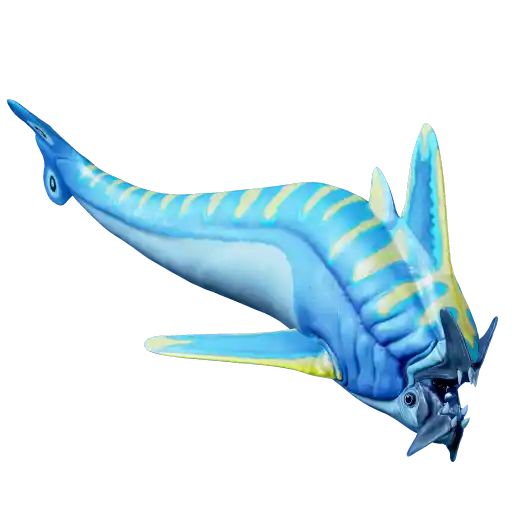 | Nibbler Mango | Creatures | *Mango tructa*. Pesky omnivore. Eats anything, thinks little. | |
| Periscopic Clowncrab | Creatures | *Ostrakonskelos periskopion*, the hard-legged periscope. A social crab that shelters among stinging anemones. 1. Reduced body The clowncrab's single-segment body is an illusion. The multiple segments of other Protean arthropods are still present, nested inside. When the clowncrab molts, it sheds its internal shells through its digestive tract. 2. Regenerative eyestalk Enormous eyestalks mimic the surrounding anemones. If bitten off by a predator, each stalk is packed with unspecialized cells that quickly regenerate missing eyes. If the stalks grow too long, the clowncrab will trim them to avoid drawing attention. 3. Anemone tender The clowncrab provides a valuable service to sessile anemones by ranging out to forage, returning nutrients in its molt and waste. It also grooms the anemones to clean parasites and infections. 4. Fecund stalk The third stalk behind the eyes is a reproductive organ. The same unspecialized cells used to heal the eyestalks become eggs or sperm. Sperm is released into the seawater, while eggs are deposited among anemones. Assessment: sign of a healthy anemone field. *Caught script hook in allocated memory for command >> generate-databank "Clowncrab" >> echo \memory-carve -signature=0xSEABEEF5 >> restore-remarks* Remark A. Centipede! I think the PDA got this thing's anatomy and reproduction completely wrong. I swear I've seen centipedes — a bunch of clowncrabs linked up in a train. I think they grow as a single, segmented organism and then each segment splits off into its own crab. And then maybe they hook up again later? It wouldn't be the weirdest thing we've seen. [metadata author=K. "Wander" Wangmo] | |
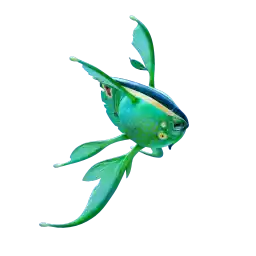 | Pneuma | Creatures | A prey fish that mimics the bladders of an undiscovered kelp species. | Food: 25Raw Food: 1Water: -5 |
| Pneumo | Creatures | *Caught script hook in allocated memory for command >> generate-databank "Pneuma" >> echo \memory-carve -signature=0xSEABEEF5 >> restore-databank* "The pneuma is one of the ecological amputees we keep finding. It evolved for a niche that no longer exists. It found new ways to get things done, but I think it's still trying to grip that phantom hand." - Sophie Boucher, *Proteus As Patient* *Pneuma pneuma*, a prey fish that mimics the bladders of kelp. 1. Fish A relative of the halfmoon (Moliform luna). The paired pectoral, pelvic and anal fins are large but closely spaced, favoring agility over speed. The tail fin is ragged. All the fins mimic the pattern of kelp blades. The spinal nerve braid is protected by an armored stem similar to a kelp stipe. The jaw is a clamp; food is rasped by the tongue. 2. Kelp mimicry The pneuma has evolved to mimic the air bladders of large kelp. It is unclear whether the pneuma traveled here from a kelp forest, or if a kelp forest in the Karakorum region went extinct. 3. Pneuma The pneuma is named for its large swim bladder. When clamped to kelp with its beak, the pneuma's bladder pulls it upward, helping to support the kelp and maintain the pneuma's camouflage. Since there is no kelp in the Karakorum regions, pneuma have instead begun to swallow rocks to use as ballast. Assessment: edible prey fish. Sign of ecological turmoil. Check for rocky ballast before consuming. | |
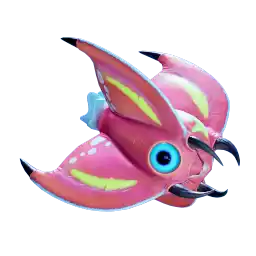 | Quadrate | Creatures | *Salpapod tetragnatha*. Similar behavior to Earth lamprey or hagfish. A risky eat. | Food: 10Raw Food: 1 |
 | Sandspear | Creatures | UNUSED_TEXT, DNL | |
| Scourge Hive | Creatures | — | |
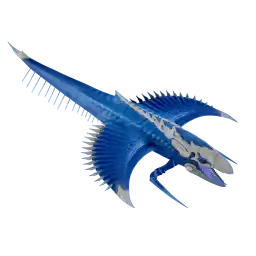 | Shiver Leviathan | Creatures | *Mango marrowbreach*. Dangerous selachian predator. Selachian means sharklike. | |
| Shiver Male | Creatures | *Skythopterygion atropos*, the scythe-finned fate-ender. The male of a sexually dimorphic leviathan predator species which dwells in open water and attacks in packs (or shivers). 1. Death's head The ancestors of the shiver leviathan diverged from other Protean fish early. The armor-plated skull and long, highly developed limbs (resembling wings and claws) are defining traits of the clade. The closest living relative may be the foureye. The body plan is optimized for slow cruises through deep water interrupted by sudden, rapid attacks. An armored skull suggests that prey fight back. 2. Sexual dimorphism Male shiver leviathans are smaller and more agile than the large female. They also lack the female's distinctive tail organs, which may be a form of long-range 'towed array' sonar. Males depend on females for guidance and nourishment during long cruises in the open ocean. 3. Shiver attack Packs of males cooperate with a single female in hunts. Attacks are aggressive and comprehensive — and not limited to prey. Females will drive off or destroy any large challenger they encounter, while males engage smaller consorts or companions. 4. Partible paternity Spectrogenetic testing suggests that multiple males fertilize a female's brood. Females may compete to attract the most successful consorts to their shiver. 5. Your closest relative? On Earth, land tetrapods (including humans) descended from the lobe-finned fish. The shiver leviathan's complex wings are loosely similar to these ancestors' fins. In a sense, the shiver leviathan is the most humanlike organism so far discovered on Proteus. Assessment: sophisticated, dangerous predator that will attack even large submarines. Avoid. | |
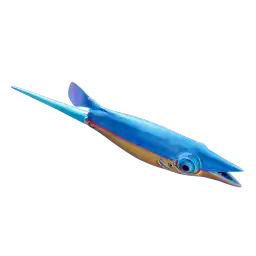 | Spiney Tail | Creatures | Edible though insubstantial fish. Difficult to grip due to its unique electromagnetic propulsion. | Food: 15Raw Food: 1Water: -5 |
| Surge Jelly | Creatures | Surge jelly (tentatively Staurobrachia capacitor). Large, complex jelly that hunts with electric shocks. 1. Single animal Unlike colonial organisms such as the Portuguese man'o'war, the surge jelly is a single animal with specialized tissues—far *more* specialized and complex than Earth jellies. Proposed class name: staurobrachia (pole arms). 2. Complex internal structure Outer bell ringed with sense organs called rhopalia. A nerve net coordinates the bell's motions to swim and seek prey. The visible inner structure is the gut. 3. Feeding structure The jelly retains its stalk — a remnant of its growth in a stack of clones. The stalk draws in nutrients for the gut. 4. Charged fins Two rigid fins contain wirelike electrocytes, likely a development of ancestral tentacles. These organs build voltage to stun or kill prey. Measured power ranges from 400 to 1000 volts at 1 ampere: enough to kill a human. 5. Peculiar passengers Traces of radioactivity, high-temperature waxes and sulfuric acid imply contact with a hydrothermal vent. Composition of the jelly's tissues suggest origins in the deep ocean. 6. Former domestics? Jellies in close proximity communicate through their electric fields. Whether jellies have individual names or a grammatical language is purely speculative, but some patterns may be trained or learned—even passed down through generations of jellies. Assessment: minor danger in close contact. Fascinating research prospect from a distance. | |
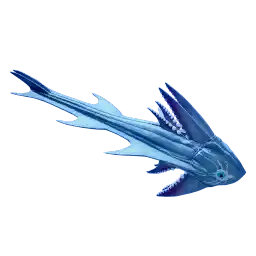 | Twin eel | Creatures | *Sitaroid gemini*, the twin ray that resembles a sitar. A dark-sea electropredator driven towards the surface by ecological disruption. 1. Sitar ray Sitar rays, named for their resemblance to Earth's guitarfish, probably diverged from mangos less than 25 million years ago (assuming that models of evolutionary change on Proteus are correct). The flat head contains remnants of a hard shield, similar to Earth's extinct pteraspidomorphs. The jaw has moved beneath the body and rotated. Two spiracles draw water for an internal gill. 2. Deepsea origins The twin sitar is adapted to lightless deep ocean. Its true eyes are buried in a layer of jelly below the skin. The remaining central eye is a hyperdeveloped parietal eye—an organ that tracks light and heat. 3. Twin strategy Like the foureye, the sitar ray is always born in pairs. When mature, the twins split up to pair with mates. Unlike the foureye, the sitar ray has no specialized organ to share food or nerve impulses. The twins clasp mouthparts to exchange food. Communication is electric, similar to Earth's knifefish. 4. Electroactive feeding Channels and ampullae along the sitar ray's body and fins contain electroplaques, modified muscles which generate electric current to stun prey. When separated, twin sitars stay connected by strands of conductive mucus. The longer this connection, the more powerful the dipole of their hunting shock. 5. Shocking behavior Monitor sitar rays for play behavior involving metal debris or constructs. Assessment: a serious threat to divers and to electrically powered vehicles and bases. | |
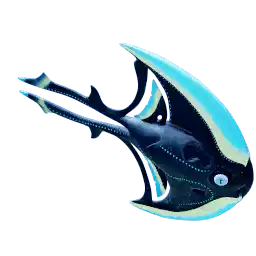 | Waxmoon | Creatures | DATABANK ENTRY COMING SOON |
Showing 1 - 41 of 41
Page 1 of 1