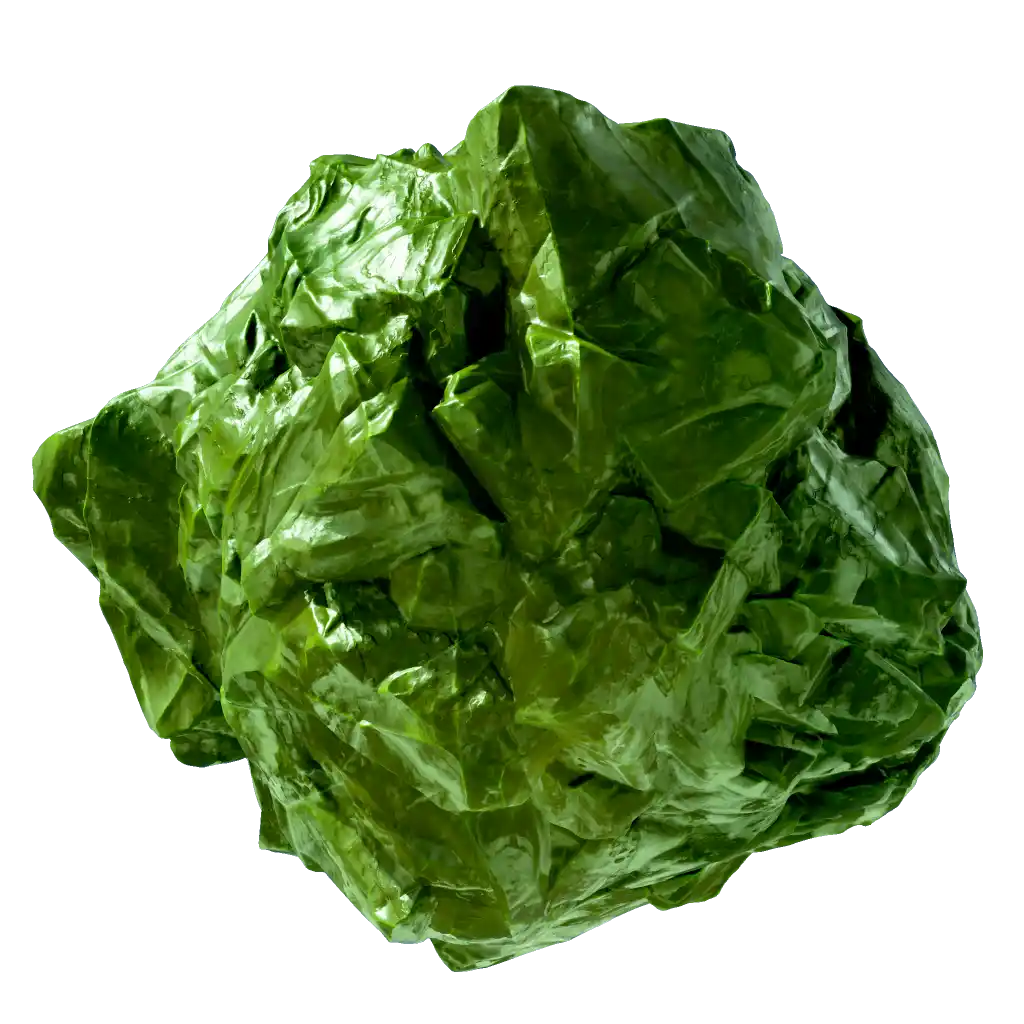
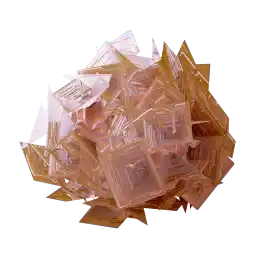
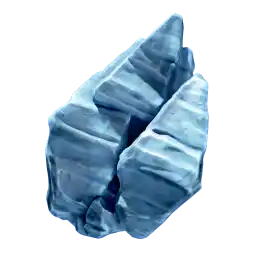
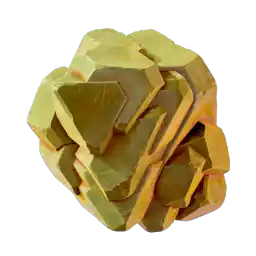
| Acid Anemone | Organic | — |
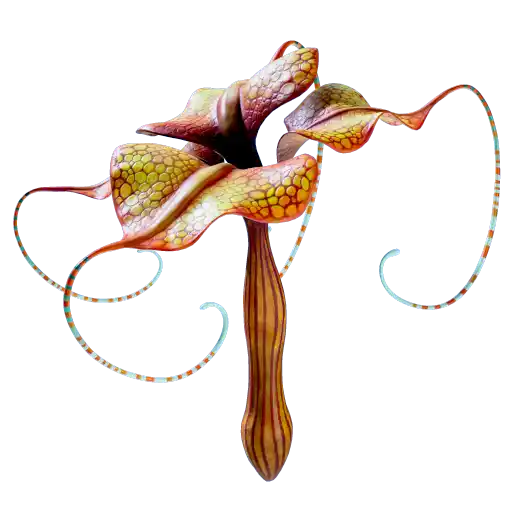
| Acid Anemone | Organic | Harvestable native plant life. |
| Atacamite | Deposits | Atacamite Databank Entry |
| Axum Bacterial Culture | Nodes | — |
| Axum Rebar Clump (Deposit) | Deposits | — |
| blight node | Organic | — |
| Cage Gorgon | Nodes | *Rotsac cherimoya*. A tunicate-like animal which collects alcohol from decaying matter to produce a creamy, flavorful mucus.
1. Cherimoya
Named for its resemblance to the terrestrial cherimoya fruit (or custard apple). It can be eaten whole or sucked on through a straw; the exterior tunic is soft but the heart, nervous system, and other organs should be spat out. The rotsac contains mercury sulfide, which will eventually accumulate to dangerous levels in the human body.
2. Peculiar metabolism
As a rough inverse of the lucifer rotsac, the cherimoya rotsac converts alcohols to sugars rather than decomposing sugars to alcohols. The cherimoya achieves this with a chemical pathway that does not occur on Earth. Aqueous cinnabar provides a source of mercury to oxidize alcohols into simple sugars. The cherimoya has no other behaviors: it simply stores sugars as it grows into a taut, full adult.
3. Symbiotic partner
Because of its plentiful stored sugars, the cherimoya is a common symbiotic partner for organisms like the cage gorgon.
4. Enteric reproduction
The cherimoya rotsac is gonochoric — either male or female. However, it does not release eggs or sperm into the seawater. Instead, its reproductive cells are eaten by organisms feeding on the cherimoya. They seek out other cherimoya rotsacs' gametes in the digestive tract of the host. The fertilized embryos are then expelled by the host organism, providing them with nutritious waste to bootstrap their growth.
Assessment: edible. Your digestive tract may briefly become pregnant.
|
| Celestine Deposits | Deposits | — |
| Celestine Nodes | Nodes | Celestine (strontium sulfate, SrSO4).
A crystalline mineral and useful source of strontium. Celestine dissolves quickly in seawater, but certain microorganisms synthesize it as a shell or ballast.
Local deposits must be the skeletons left by dead colonies of these organisms. The colonies may have overgrown on an artificial strontium source, then died off when the source was removed.
Strontium (Sr), element 38, is a soft and highly reactive metal with applications in radiothermal power generation. Strontium on this planet contains elevated levels of Strontium-90, a highly radioactive, bone-seeking isotope which poses a long-term health risk to human colonists. Strontium-90 is only produced in nuclear fission reactions.
Assessment: do not ingest. |
| Cherimoya Rotsac Fruit | Organic | — |
| Copper Node | Nodes | Bacteria concentrate copper in low-light areas. Search cave roofs, overhangs, shadowed crevices. |
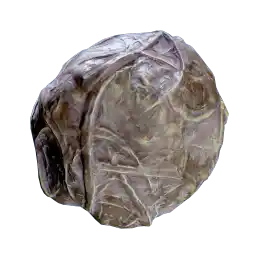
| Coral Cabbage | Organic | — |
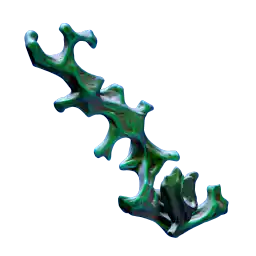
| Coral Clump | Organic | — |
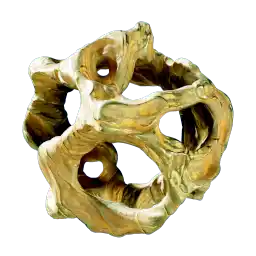
| Coral Dome | Organic | *Coral geodesica*. The defining feature of its shallow biome.
1. Coral analog
Like Earthly coral, the dome is a colony of polyps, small jellyfish-like animals that secrete a limestone skeleton. This process uses dissolved carbon dioxide from the seawater: corals are therefore an important method of climate regulation, since they transform atmospheric carbon into hard limestone.
2. Dual feeding strategy
The dome's outer surface feeds on sunlight, using photosynthetic symbiotes known as zooxanthellae. As the dome grows, the colony clears its interior, recycling the limestone for reuse. Polyps on the inside of the dome hunt with stinging tentacles.
3. Mineral expulsion
As the dome grows, it collects and expels mineral waste, creating nodes of quartz.
4. Critical ecosystem element
The dome corals help regulate global climate and provide a breakwater, reducing erosion in their shallow surroundings. The domes capture nutritious sediments from sea currents. Pioneers should prioritize a survey of coral health.
Assessment: critical source of quartz. Vital to the local ecosystem. |
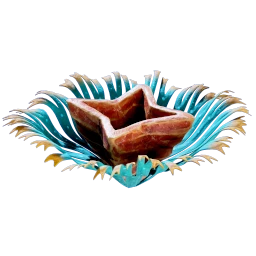
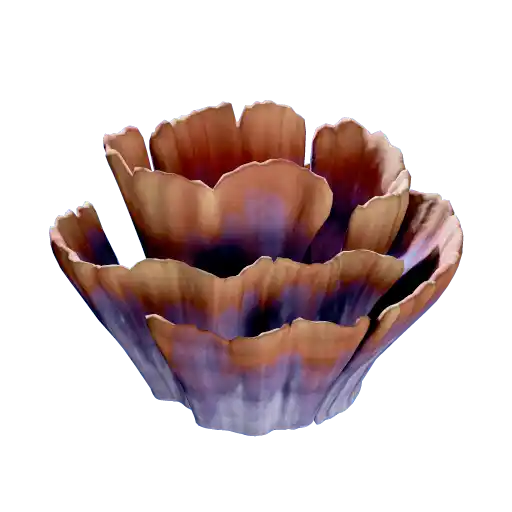
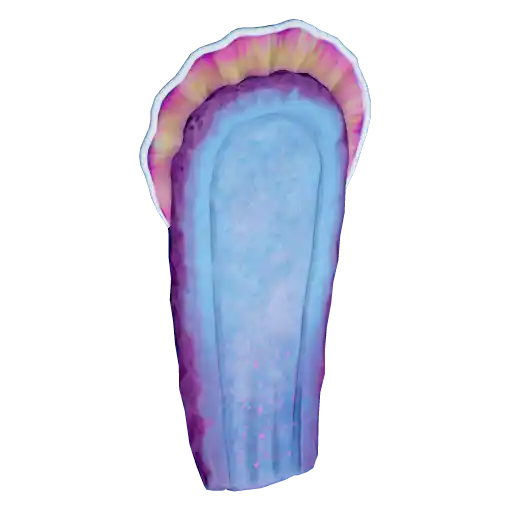
| Coral Pad | Organic | *Coral dragonscale*. A hard coral that grows on hydrothermal vents, using the temperature gradient between its hot base and its cold-water lip to drive metabolic reactions.
1. Hard coral
Dragon's scale polyps must grow their hard coral shells in water rich with dissolved minerals—a good resource, if it doesn't dissolve you too. Limestone cannot survive in this ventwater. Instead, the dragon's scale polyps extend long fibers which collect metal ions. These metal whiskers are both an anchor for further mineral growth and the key to the coral's metabolism.
2. Whisker-based metabolism
The difference in temperature between the cold and hot end of the dragon scale induces electrical current along its whiskers, which the dragon scale polyps use to drive its metabolism.
3. Troilite superconductor
Deposits of troilite (an iron sulfide mineral) within the dragon scale enter an unusual quantum spin state when heated above 150C.
Assessment: possible applications to research and computation. |
| Coral wafers | Organic | — |
| Crab Feces | Organic | — |
| Cradle Shootroot | Organic | — |
| Crimson Shrimp | Nodes | — |
| Curtain Gorgon | Organic | — |
| Eyeball Sponge | Nodes | — |
| Eyeball Sponge01b | Organic | — |
| Fern Kelp | Organic | — |
| Freesia Flower Plant | Organic | Harvestable native plant life. |
| Freesia Plant (Cut For FIber) | Organic | — |
| Fulgurite Loose | Loose | Kagome optical fibers derived from shock quartz. Naturally occuring wires for light. |
| Gold Node | Nodes | Gold (Au), element 79.
Shares many properties with copper and silver.
Highly conductive and ductile. Can form atom-thin wires. Critical for corrosion-resistant electronics, especially in humid environmnents.
Also useful for shielding spacesuits and spacecraft against heat.
Rare—tends to sink to the core of planets during formation. If you cannot access the core of the planet, search for surface deposits formed by bacterial accumulation. |
| Lead (Deposit) | Deposits | Lead (Pb, element 82).
A dense metal and the heaviest stable element. Found in many ores.
Useful in construction alloys, ballast, radiation shielding, and some very large batteries.
Due to this world’s high metallicity, lead plays an unknown but significant role in the biosphere. All indigenous organisms and water sources are tainted with lead.
Lead can mimic other metals involved in human biology, replacing them in critical reactions. It is a devastating toxin. Long term exposure requires urgent chelation therapy. Take any possible steps to remove lead from your food and water supply.
The presence of organolead compounds in the biosphere of Rakshasa played a major role in the breakdown of the expedition and the renewal of the Obraxis Principle. |
| Lead Node | Nodes | Lead (Pb, element 82).
A dense metal and the heaviest stable element. Found in many ores.
Useful in construction alloys, ballast, radiation shielding, and some very large batteries.
Due to this world’s high metallicity, lead plays an unknown but significant role in the biosphere. All indigenous organisms and water sources are tainted with lead.
Lead can mimic other metals involved in human biology, replacing them in critical reactions. It is a devastating toxin. Long term exposure requires urgent chelation therapy. Take any possible steps to remove lead from your food and water supply.
The presence of organolead compounds in the biosphere of Rakshasa played a major role in the breakdown of the expedition and the renewal of the Obraxis Principle. |
| Lithium | Loose | Lithium (Li), element 3.
The softest and least dense of all metals. Often found dissolved in seawater or in pegmatite deposits, especially near thermal vents.
Useful in lubricants, batteries, advanced glass, nano-welding, quantum physics, and anti-aging drugs. Also a budget air-cleaning element on spacecraft.
Lithium’s role in this world’s biosphere is unknown. In humans it has historically been used as an antidepressant. Despite the advent of cognitive connectome therapy, lithium is still used as a folk remedy on some worlds, despite the risk of permanent side effects. |
| Lithium Clamthulu Pearl | Nodes | — |
| Locust Swarm | Nodes | — |
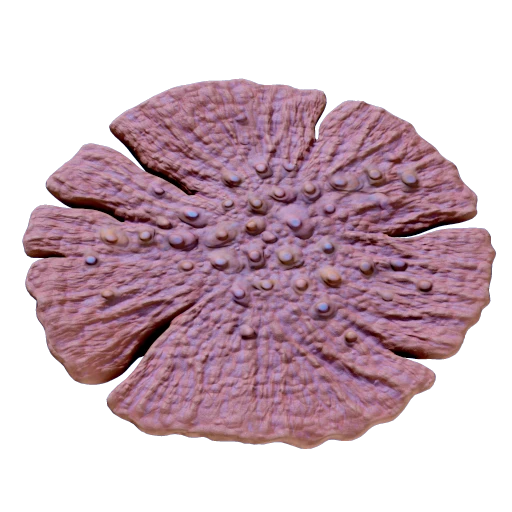
| Macaron Sponge | Organic | *Symphon macaron*. A sponge that has developed a disc of flagellated feeding cells. Named for the dessert sandwich cookie (not available in current fabricator settings).
1. Hardened plates
Instead of a sponge's normal inner and outer layers, the macaron develops two hard plates of pinacoderm. These anchor the feeding disc to a holdfast.
2. Feeding disc
The sponge's mesohyl (internal jelly) has specialized into feeding disc, with tentacled cells that pull particles from the surrounding seawater. This leaves the delicate jelly vulnerable to predators and parasites.
3. Hostage exchange
The feeding disc hosts the larvae of sponge-eating organisms in its pores. By providing a shelter and habitat for their young, the macaron may buy itself a degree of safety and defense. (These larvae are themselves tempting prey for many species.)
4. Unusual protein expression
Many of the cells in the feeding disc express proteins also found in the hosted larvae. This may be a recognition signal to attract the desired species.
ASSESSMENT: Inedible despite name. Await further updates.
|
| Macaron Sponge Plant | Organic | Harvestable native plant life. |
| Mineralized Clinker | Deposits | Hardened industrial runoff. Contents vary based on local production during the waning days of the Axum. |
| Necrolei Cyst | Nodes | — |
| Necrolei Egg (Strong Acid) | Organic | — |
| Needler Shark Needle Clump (Deposit) | Deposits | — |
| Oxygen Plant L | Organic | — |
| Plant Bulb | Organic | — |
| Plant Feeler | Organic | — |
| Poison tube cluster | Organic | Databank entry coming soon. |
| Prismatic Shell | Organic | — |
| Quartz Node | Nodes | Coral domes expel waste silica as they grow. Check the surface and interior of coral domes.
In areas where domes do not grow, quartz may be located in sandy areas. |
| Quartz With Base | Nodes | — |
| Salt Node | Nodes | Halite (NaCL), commonly known as salt. A critical nutrient and a favorite flavor in human foodstuffs.
Nearly four percent of the alien seawater is dissolved salt—far higher than the concentration in human blood. Living things (even on this world) cannot survive this level of salt in their bodies.
As a result, organisms spend a great deal of energy pumping salt out of their bodies. Some fish use a third of their metabolic energy to pump salt.
A shortage of salt is equally dangerous. Hyponatremia causes hallucinations, seizure, coma and death (easily confused with other syndromes caused by exposure to this alien environment).
Assessment: search for salt on sandy sea bottoms and around dead coral domes.
Note: pools of salt-heavy brine may occur at the sea floor. Contact with this brine may cause seizures and death. Certain bacteria (halophiles) can thrive in these environments. |
| Silver Node | Nodes | Silver (Ag), element 47.
The most conductive and reflective of all pure metals. Silver nanoparticles are vital in both medical technology and nanoprinted circuits.
Also important in modern nuclear reactors and high-efficiency solar panels.
Silver accumulation in the body (from exposure in seawater and diet) can cause long term health effects ranging from blue skin to death. This world’s dissolved silver levels are unsafe for human habitation.
Consult your Noetic Advisor to research optimal search areas. |
| Stilt Orb | Organic | — |
| Sulfur Deposit | Deposits | — |
| Sulfur Loose | Loose | Sulfur (S), element 16. A highly reactive nonmetal useful for chemistry, especially the production of acids, and an essential element for life.
Historically known as brimstone, with applications in medication and fertilizer.
Some organisms use sulfur in their metabolism, even in the absence of oxygen. These sulfur-reducing organisms can form the base of a food web in deep sea habitats.
Assessment: search for elemental sulfur deposits near thermal vents or volcanic activity. |