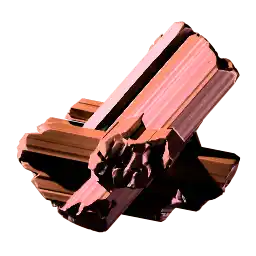
| Diamond | Resources | C. Element 6. Crystalline carbon allotrope with superb physical properties. |
| Dining Chair | Base Building | A refined chair for approved breaks. |
| Dining Table | Base Building | A place to enjoy meals during assigned hours. |
| Disperser | Personal | Use to disperse substances into the environment, such as medicines. |
| Distraction Flare | Personal | Expendable light source. High likelihood of creature response. |
| Dive Bladder | Bio Lab | Sink more quickly when descending feet first |
| Dive Elevator | Base Building | Underwater elevator. Ideal for establishing work sites. |
| Diving Reflex | Bio Lab | Whenever you run out of Oxygen, you are rapidly shot upwards for a short duration |
| Duplex Solar Panel | Base Building | Generates energy from sunlight. Reduced output at night or in deep water. |
| E A1 Story Over | Main Story | PROCEED WITH SELF-DIRECTED EXPLORATION AND COLONY DEVELOPMENT
STAND BY FOR UPDATES |
| E M T Equippable Item Type | Personal | Electromagnetic Torsioner |
| Echo Location | General | Pings resources nearby. |
| Electric Discharge | Bio Lab | Emit an 800 volt electric shock to deter medium and large predators |
| Electric Geordie | Creatures | Full of electrolytes. |
| Electric Geordie | Bio Lab | — |
| Enameled Glass | Resources | Reinforced glass. Designed to withstand greater levels of barometric pressure. |
| Engine Efficiency | General | Optimizes engine function in real time to reduce power use by 20%. Stacks up to four times (max 80%). |
| Enhanced First Aid Kit | Personal | Improved, trauma-grade medical satchel. Derived from Frontiersman medkits customized and re-packed by Frontiersman medics. |
| Enhanced Pupils | Bio Lab | Activate night vision while holding a mineral |
| Entangled Power Cell | Consumables | Ultra-high-capacity solid state mobile power source. Exploits phase conjugation in gold-sputtered optical fibers for quantum advantage. |
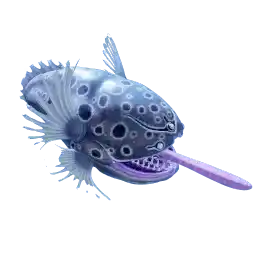
| Epicurean | Creatures | *Postpanoplia epicurean*, the voracious unarmored armored fish. Unpredictable and hungry, especially when under the influence of a parasite.
1. Sea hippo
The epicurean is a true omnivore, consuming dozens of kilograms of animals, microorganisms, minerals and corals every day. Digesting this diet is expensive, fueling the epicurean's hunger. By devouring and defecating, the epicurean spreads nutrients and fine-ground sand, making it a keystone species in its ecosystem.
2. Lobe-finned enormity
The epicurean is a younger relative of the hammerhead, but it has lost its armored shield, allowing it to open its huge grinding jaw. Both the central pineal eye and the lateral eyes are fully developed. These changes suggest the epicurean no longer competes in tournaments for territory and mates.
3. Hunger
The hungrier the epicurean, the more likely it is to attack a pioneer.
4. Parasite
The epicurean often swallows parasites with its food, which take root in its mouth, blocking nerve pathways which signal fullness to the epicurean's brain. Infested epicureans believe they are starving, and attack with ravenous hunger. Explore methods to expel the parasite, and try to avoid becoming an unsatisfying meal.
Assessment: ecologically vital but an unpredictable danger to divers. Check for and (if possible) expel mouth parasites. |
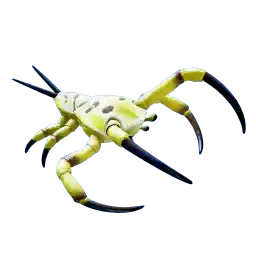
| Epicurean Symbiote | Creatures | *Ostrakonskelos glossaklept*, the hard-legged tongue thief. A parasitic crab or louse that dwells in the mouth, causing intense and unremitting hunger.
1. Crablike body plan
A close relative of other Protean crabs, belonging to the infraorder Adulati. The segmented body has two cerci, nerve-rich organs which evolved from legs. The mouthparts are simple. The tongue thief relies on its host to chew food.
2. Parasitic hijack
Tongue thieves mimic other prey species until swallowed, then use a numbing agent to paralyze the predator's jaw long enough to anchor to the tongue. This numbing agent blocks the nerves that signal satiety (fullness) to the brain.
3. Semi-cooperative hunting
Although they are parasites, tongue thieves' small eyes and grasping limbs help the host latch onto food.
4. Reproduction
Tongue thieves anchor eggs or spermatophores in the mouth of their host, where they wait for a thief of the opposite sex to arrive. Infant tongue thieves (called manca) pass through the host's digestive tract.
5. Possible cultural function
In the same way some human cultures use capsaicin in food, it is conceivable that other organisms might develop a taste for the tongue thief's numibng agent. Personal experimentation would be ill-advised.
Assessment: expel parasite to reduce host hunger. Be alert for juveniles who may attempt to infest your mouth. |
| Expanded Deployable Locker | Personal | Expanded version of the deployable locker: a watertight storage enclosure that remains fixed in position. |
| Eyeball Sponge | Nodes | — |
| Eyeball Sponge01b | Organic | — |
| Fabricator | Base Building | Critical survival system. Atomically restructures raw resources into useful tools and consumables. |
| Fast Urology | Bio Lab | You consume water at double the rate. |
| Fast-twitch Optimization | Bio Lab | Dash consumes much less Oxygen |
| Feedback Resonator | Personal | Modified sound amplifier. Uses a bacterial feedback system to analyze and shatter hardened biomolecules. |
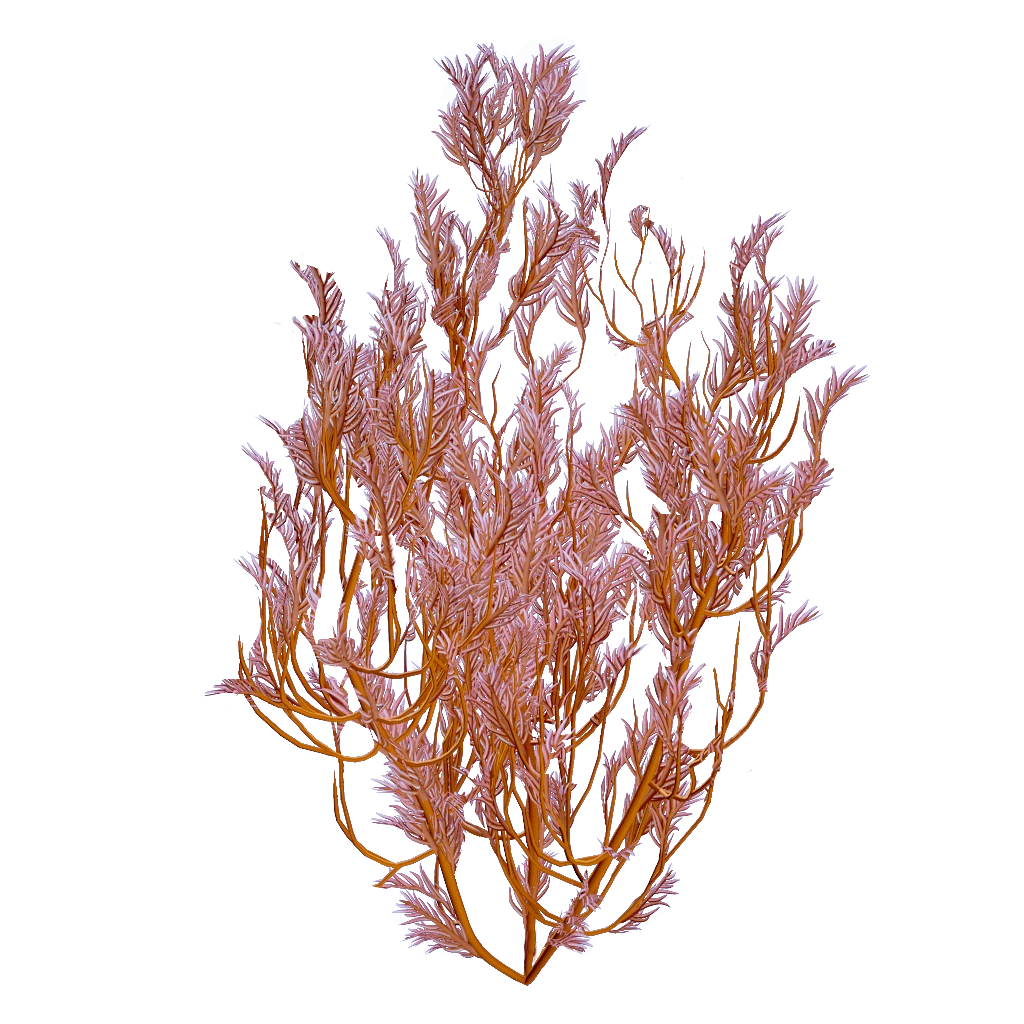
| Fern Kelp | Organic | — |
| Ferrokinesis | Bio Lab | Attract nearby metal |
| Fiber | Resources | Organic fiber. Closer to plastic or latex than cellulose. |
| Fiber Mesh | Resources | Strong mesh of plastic fiber. Resembles vinyl. |
| Fibrous Pulp | Resources | Raw, fibrous biomatter. Smells of cinnamon and alcohol. |
| Filter Feeding | Bio Lab | Gain food by swimming |
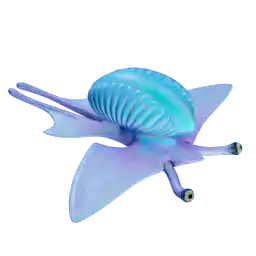
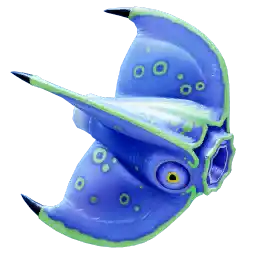
| Flash Fish | Creatures | *Seaslug kleptopharos*, the stolen beacon slug. A free-swimming, luminescent relative of the waterslug with chimeric traits from another species entirely.
1. Microbial photocell
The flash slug is powered by the same type of microbial fuel cell present in the waterslug. The slug inhales plankton as it swims, which it digests with photodecomposition and feeds to luminescent bacteria that live in coils of glassy fiber deep in its mantle. These fibers generate and direct bioluminescence, and may in fact be biological lasers.
2. Light control
The flash slug uses its light to attract food and mates. When threatened, the slug charges up a flash of blinding coherent light to drive off attackers. Spectrogenetic analysis suggests this defense mechanism evolved from a system of internal gene regulation: its original function, millions of years ago, was to activate and deactivate genes inside the slug's body with coded light signals.
3. Raylike body plan
The flash slug swims with ray-like wings that grow from its foot. CORRECTION: The first draft of this output incorrectly attributed these wings to genetic sequences transferred from a Protean ray. In fact, the wings are a development of the slug's mantle, like Earth's Spanish dancer. The shared sequences with Protean rays may be related to item 4 below.
4. Enigmatic viral traffic
Millihertz variations in the slug's flash patterns appear to be correlated with Proteavirus activity inside the slug's tissues. The flash signals what the virus is doing — but also triggers changes in viral activity in other slugs (and, perhaps, other species that see the flash). It is possible that the flash slug's light displays give the Proteavirus a high-speed data channel.
Assessment: may provide a useful deterrent against predators if gripped. Close eyes to avoid damage. |
| Flashlight | Personal | Handheld LED light source. |
| Floating Locker | General | Carryable, deployable storage. Does not change swim speed. |
| Floor Locker | Base Building | A larger, more robust storage solution for wealthy pioneers. 30 Storage slots. |
| Food Bank | Bio Lab | Eat or drink to pacify & lure creatures |
| Four Eye | Creatures | Foureye (*Morokotoform duplex*). A predatory fish always born in pairs of identical twins. The twins pair belly-to-belly, joining their digestive and nervous systems to behave as a single organism.
1. Predatory individual
The individual "two-eye" is convergent with Earth fish. Large, mobile pectoral fins are suited to quick maneuvers, not cruising. Squashed eyes offer better vision upward. Individuals feed on smaller forage fish and hard-shelled crustaceans.
2. Duplex team
Two individuals pair into a complete four-eye through a pair of modified ventral fins, which have evolved into sensitive structures similar to Sol sharksuckers. (Repeating this phrase can help train vocal dexterity.) The embryonic yolk stalk grows through the forward sucker, allowing the joined pair to share nutrients. Nerve clusters in the suckers trigger each other through the skin, passing sensory data and motor commands. Separated individuals are prone to brief seizures, suggesting the nervous system is sensitive to external influence.
3. Dynamic pairing
Four-eyes can unpair and repair at any time. When sexually mature, twins paired since infancy split up to seek out mating partners, forming new four-eyes. Mated pairs may be cross-sex (with the male fertilizing the female) or same-sex (with both individuals cooperating to locate a mate or mates).
4. Aggression
The duplex foureye is aggressive and willing to attack even larger species. It is unclear if this is a territory-guarding strategy, a relic of some ancient group behavior, or even a form of youthful play.
5. Solitude
Solitary two-eyes may be ill or in mourning. Avoid.
Assessment: minor danger. Be alert for unpredictable attacks. |
| Freesia Flower Plant | Organic | Harvestable native plant life. |
| Freesia Plant (Cut For FIber) | Organic | — |
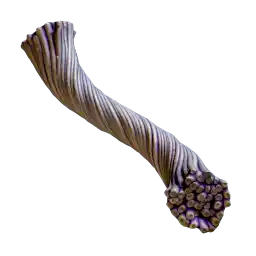
| Fulgurite Loose | Loose | Kagome optical fibers derived from shock quartz. Naturally occuring wires for light. |
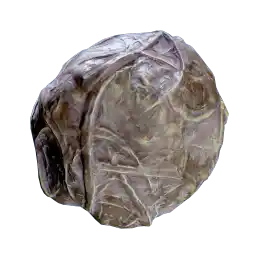
| Gateway Crystal | Resources | You can see yourself in this. So many versions of yourself. Of youselves. Of all your selves...there are so many. |
| Gelatinous Skin | Bio Lab | When you take damage you are vulnerable, taking an additional 15% damage from all sources for 10s. 60s cooldown. |
| Geordie | Creatures | *Salpapod geordie*. Jet-propelled omnivore. Not a fish. |
| Geordie | Bio Lab | — |
| Germanium Ingot | Resources | Ge. Element 32. Solid mass of Germanium for fabricator machining. |
| Glass | Resources | Aligned quartz crystal. Hard, clear, tough. |