


















Subnautica 2 All Items
Add to Favorites
Ongoing Refinement: We are continuously updating the database throughout the Early Access period. Some icons and descriptions may be placeholders as the game evolves.
Subnautica 2 All Items Database List
| Type | Description | ||
|---|---|---|---|
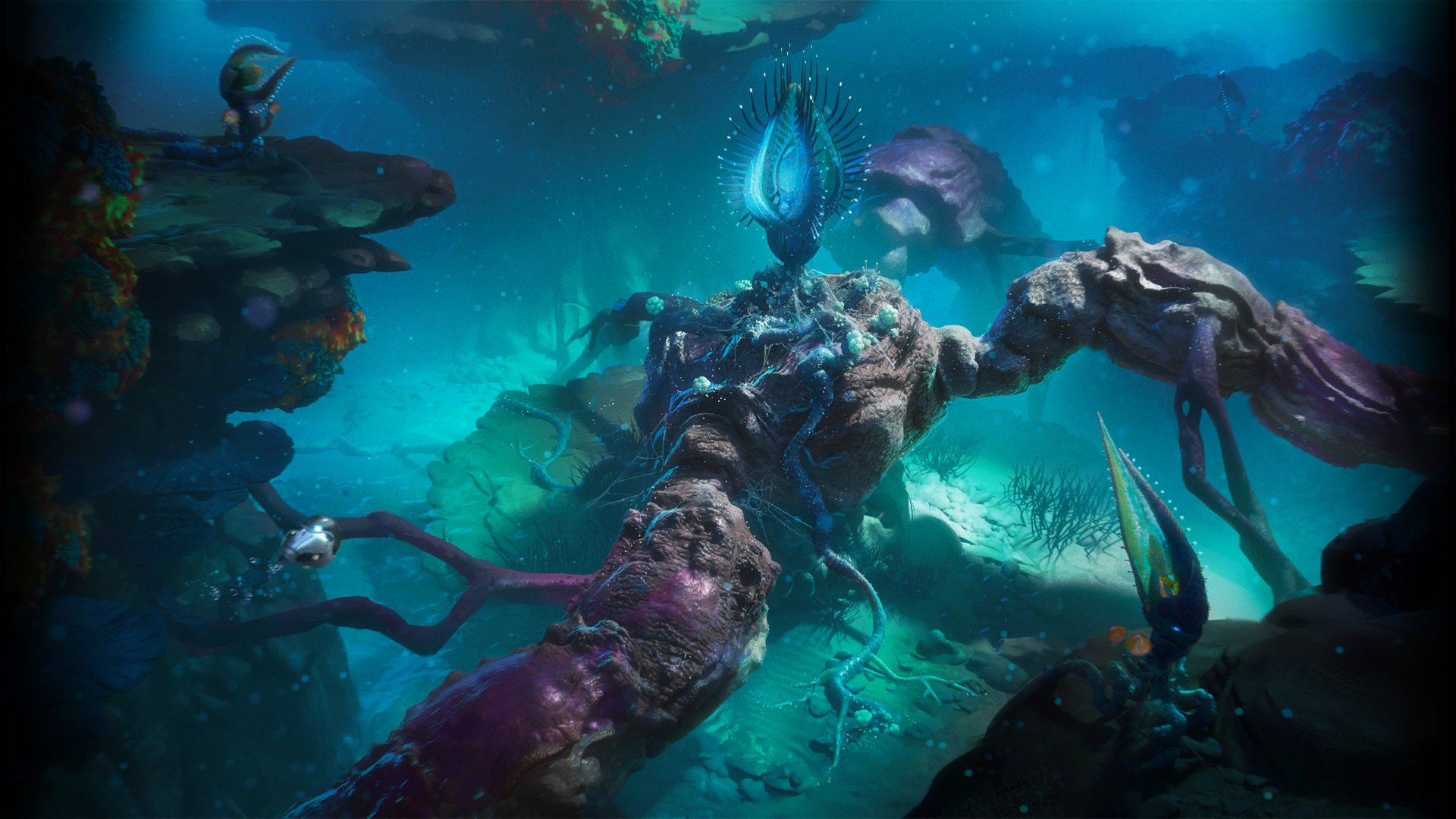
 | Collector Leviathan | Creatures | Enormous cephalopod predator (tentatively *Tyrannoteuthis phobocoeus*, tyrant squid of fearful curiosity). Feeds on hard-shelled, heavily defended prey. Solitary but highly intelligent. Likely a deep-sea creature. 1. Squidlike body plan The collector's body converges with Earth squid — a long mantle and several limbs attached directly to the head. The mantle is covered in plastic armor. Unlike Earth squid, the collector has four long hunting tentacles with dextrous claws. Its eight arms are small and grouped around the beak. 2. Powerful thruster Two large spiracles feed a rear-facing thruster. These spiracles are separate from the four gills openings on the head, allowing the collector to separate its breath rate from its thrust speed. Two secondary hearts pump blood from the gills to the main heart. 3. Hard prey An enormous beak (capable of tearing through plate titanium) and four dextrous tentacles tipped with sharp bioglass claws imply that the collector specializes in prying or tearing open heavily armored prey. Possible prey fauna include the coral crab and great jaw. The need to defeat armored, active prey may have evolved a curious and aggressive psychology. 4. Broadcast organ This huge, many-chambered organ is a biological phased-array sonar. Multiple 'speakers' and 'ears' allow the collector to broadcast complex multi-part pulses. Dense innervation connects this organ to the toroidal brain; patterns of bioluminescence may be direct reflections of the collector's brain activity. 5. W-shaped pupil In bright light the pupil creases into a W. This trait was present in Earth cephalopods, but its function was not determined before the Holocene collapse. 6. Abyssal gigantism Organisms from the deep sea are often very large, a phenomenon known as 'abyssal gigantism'. Assessment: hunters with varied and difficult diets are likely to be intelligent and inquisitive, and a predator's curiosity may appear to prey as arbitrary torture. Any small submersible or habitat is likely to draw the collector's interest. |
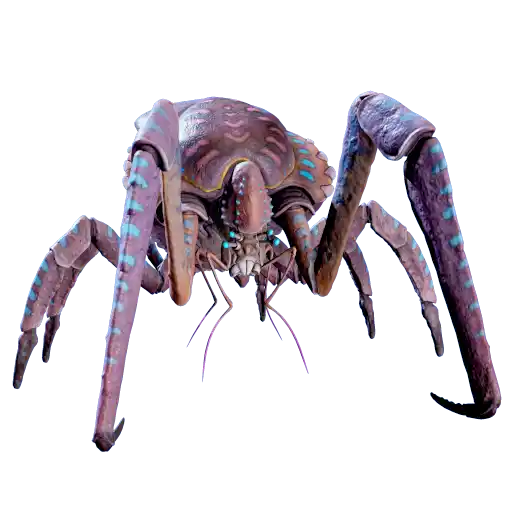 | Coral Crab | Creatures | An enormous crab (tentatively *Ostrakonskelos anaktoraphore*, hard-legged palace-bearer) that hides among coral domes. 1. Crablike body plan Forelimbs rake and dig for food which is collected by long soft maxillipeds (food handling limbs) around the mouth. The crab must molt to grow. 2. Coral dome A living coral dome, cut from its holdfast and worn. It provides camouflage, protection, and perhaps a nursery for the crab’s young. Are they married to a single dome, or are domes traded as they grow? 3. Implicit predator Defenses and behavior imply the existence of a predator powerful and dextrous enough to shuck the crab from its dome and crack its heavy armor. 4. Viral activity Genome contains large repeated retroviral inserts, including nerve growth factors and shell pigments. Molecular clock suggests they were recent introductions. Cells on the crab’s back contain large segments of the coral dome polyp’s genome. 5. Large brains The coral crab has no spinal nerve braid. A large brain above the eyes manages senses and behavior planning, while a secondary nerve cluster controls the legs and digestive system. 6. Seafloor communication Coral crabs drum on the seafloor to signal to each other. Claw-clacking is likely a sign of intense excitement or agitation. Some Earth crabs seek desirable partners to pair with prior to molting, a behavior known as ‘handholding’. Finding a similar behavior on this world may be emotionally rewarding. 7. Signs of ecological stress Mineral deficiencies and fungal infections imply environmental stressors. Assessment: likely fears you more than you fear it. Be cautious and respectful. At least as intelligent as a gorilla. Possibly a useful source of seabed resources. Research proposal: determine whether the crab carries its dome to sunny or nutrient-rich areas for feeding. |
| Coral Crab | Bio Lab | — |
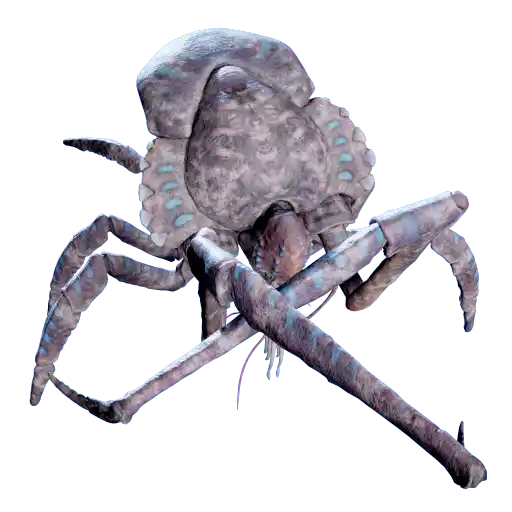 | Dead Coral Crab | Creatures | The remains of a large crustacean (dead) and a coral dome (bleached, dead). The crab may have used the dome as a portable shelter. |
Showing 1 - 4 of 4
Page 1 of 1