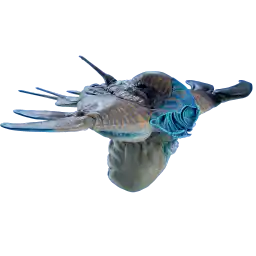
| Colonist Bunker (Unauthorized NoA Modification) | Investigations | A remote habitat buried in volcanic rock near a tremendous sinkhole or lava tube.
-Contains a biobed rigged to upgrade colonists' bodies (license violations have disabled the bed's ability to reprint lost colonists)
Components of a disassembled NoA terminal scattered around the site suggest that it was used in an attempt to subvert, reprogram, or disable proprietary Alterra business intelligence. |
| Community Poster 02 | Base Building | Decorative Poster |
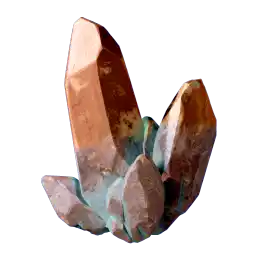
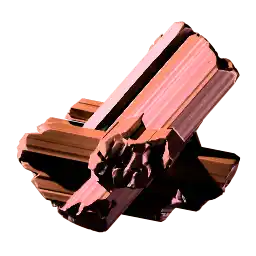
| Conduit Crystal | Resources | Kagome optical fibers derived from shock quartz. Naturally occuring wires for light. |
| Confront Bloom | Main Story | RECOMMEND SORTIE TO THE WEST
-GATHER INFORMATION ON VIRAL ECOLOGY
-EXPLORE APPLICATIONS OF SONIC RESONATOR
-SEARCH FOR USEFUL ADAPTATIONS
BE PREPARED FOR ELEVATED RISK |
| Cooked Black Hoverthorn | Sustenance | Edible fish. Use the crystal as a skewer to hold while eating. |
| Cooked Bluemoon | Sustenance | Edible fish. A little blue. A little waxy. |
| Cooked Electric Geordie | Sustenance | Electrolyte-rich non-fish organism. |
| Cooked Geordie | Sustenance | Edible non-fish organism. Prepped for human digestion. |
| Cooked Halfmoon | Sustenance | Edible fish. Minimal risk of xenogout. |
| Cooked Harvestmoon | Sustenance | Edible fish. A bit juicier and plumpier than its cousin Halfmoon. |
| Cooked Hoverthorn | Sustenance | Edible fish. Use the crystal as a skewer to hold while eating. |
| Cooked Pneuma | Sustenance | Edible prey fish. Tough skin and soft, spongy innards.
|
| Cooked Quadrate | Sustenance | Edible organism. Partially rinsed of heavy metals. |
| Coolant Exhalation | Bio Lab | Substantially increase Scan and Repair speed |
| Cooldown | Bio Lab | Ability prints a string and applies cooldown. |
| Copper | Resources | Cu. Element 29. Basic conductor. |
| Copper Finder | Bio Lab | When close to copper, highlight any copper that is near |
| Copper Ingot | Resources | Solid mass of copper for fabricator machining. Normally a GHS code H400 toxic hazard to aquatic life, but life on this world is untroubled. |
| Copper Node | Nodes | Bacteria concentrate copper in low-light areas. Search cave roofs, overhangs, shadowed crevices. |
| Copper Wire | Resources | Conductive wire for basic electrical work. |
| Coral Cabbage | Organic | — |
| Coral Clump | Organic | — |
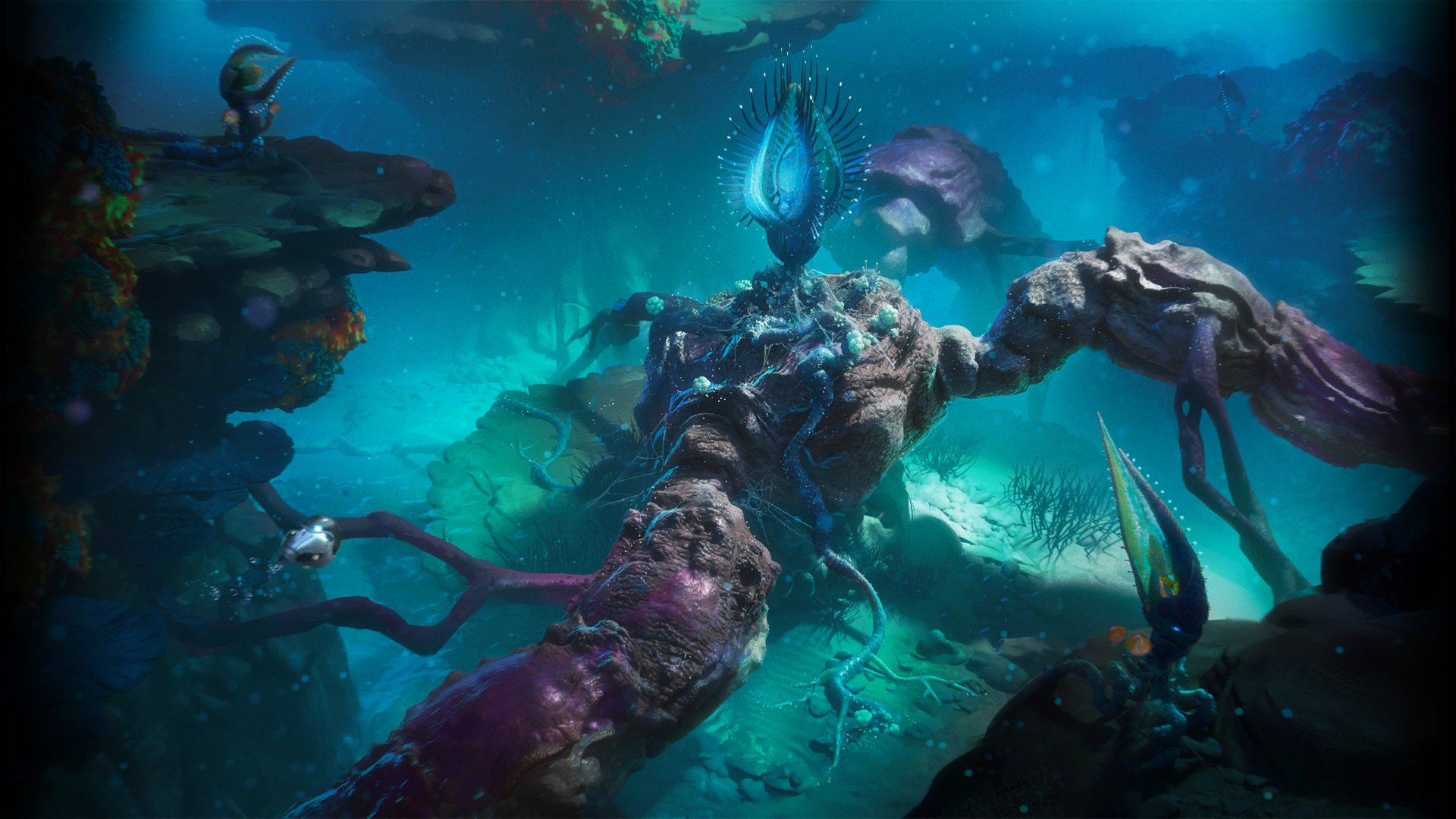
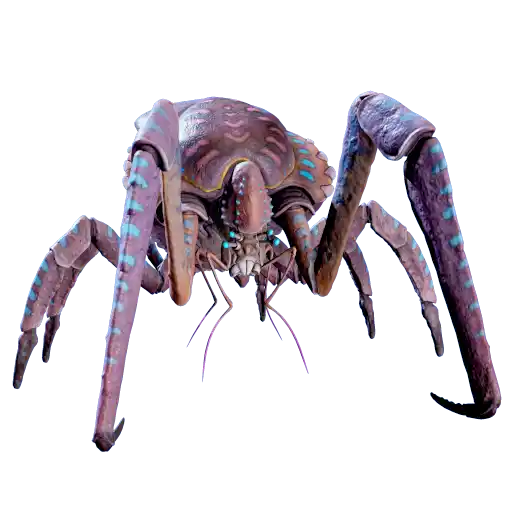
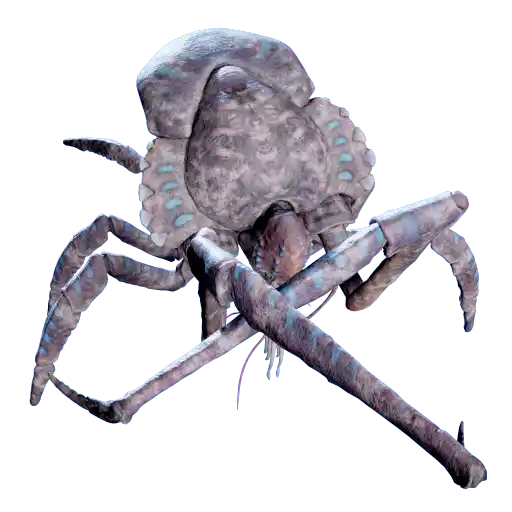
| Coral Crab | Creatures | An enormous crab (tentatively *Ostrakonskelos anaktoraphore*, hard-legged palace-bearer) that hides among coral domes.
1. Crablike body plan
Forelimbs rake and dig for food which is collected by long soft maxillipeds (food handling limbs) around the mouth. The crab must molt to grow.
2. Coral dome
A living coral dome, cut from its holdfast and worn. It provides camouflage, protection, and perhaps a nursery for the crab’s young. Are they married to a single dome, or are domes traded as they grow?
3. Implicit predator
Defenses and behavior imply the existence of a predator powerful and dextrous enough to shuck the crab from its dome and crack its heavy armor.
4. Viral activity
Genome contains large repeated retroviral inserts, including nerve growth factors and shell pigments. Molecular clock suggests they were recent introductions. Cells on the crab’s back contain large segments of the coral dome polyp’s genome.
5. Large brains
The coral crab has no spinal nerve braid. A large brain above the eyes manages senses and behavior planning, while a secondary nerve cluster controls the legs and digestive system.
6. Seafloor communication
Coral crabs drum on the seafloor to signal to each other. Claw-clacking is likely a sign of intense excitement or agitation. Some Earth crabs seek desirable partners to pair with prior to molting, a behavior known as ‘handholding’. Finding a similar behavior on this world may be emotionally rewarding.
7. Signs of ecological stress
Mineral deficiencies and fungal infections imply environmental stressors.
Assessment: likely fears you more than you fear it. Be cautious and respectful. At least as intelligent as a gorilla. Possibly a useful source of seabed resources.
Research proposal: determine whether the crab carries its dome to sunny or nutrient-rich areas for feeding. |
| Coral Crab | Bio Lab | — |
| Coral Dome | Organic | *Coral geodesica*. The defining feature of its shallow biome.
1. Coral analog
Like Earthly coral, the dome is a colony of polyps, small jellyfish-like animals that secrete a limestone skeleton. This process uses dissolved carbon dioxide from the seawater: corals are therefore an important method of climate regulation, since they transform atmospheric carbon into hard limestone.
2. Dual feeding strategy
The dome's outer surface feeds on sunlight, using photosynthetic symbiotes known as zooxanthellae. As the dome grows, the colony clears its interior, recycling the limestone for reuse. Polyps on the inside of the dome hunt with stinging tentacles.
3. Mineral expulsion
As the dome grows, it collects and expels mineral waste, creating nodes of quartz.
4. Critical ecosystem element
The dome corals help regulate global climate and provide a breakwater, reducing erosion in their shallow surroundings. The domes capture nutritious sediments from sea currents. Pioneers should prioritize a survey of coral health.
Assessment: critical source of quartz. Vital to the local ecosystem. |
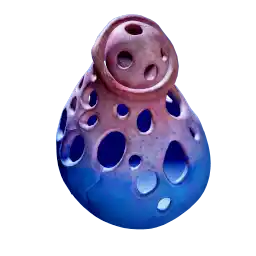
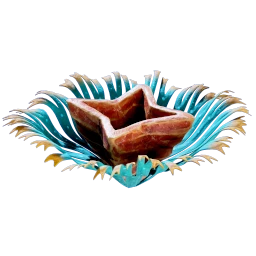
| Coral Jar | Base Building | Decorative jar made from organic material |
| Coral Mash | Sustenance | Mashed coral grounds sweetened with lead. Do not chew: suck to extract coral polyps, then spit. Positive labor-unit ROI despite reduced lifespan maxima. |
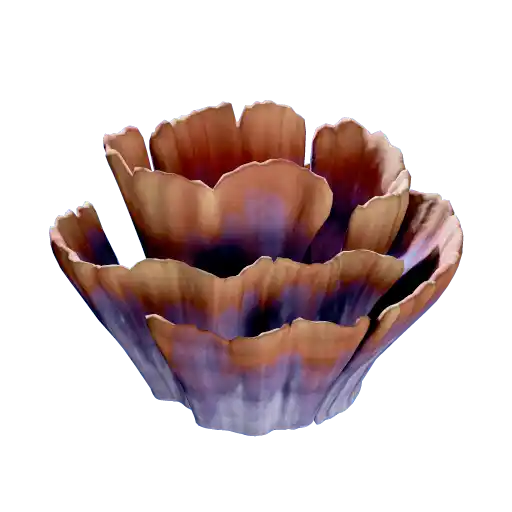
| Coral Pad | Organic | *Coral dragonscale*. A hard coral that grows on hydrothermal vents, using the temperature gradient between its hot base and its cold-water lip to drive metabolic reactions.
1. Hard coral
Dragon's scale polyps must grow their hard coral shells in water rich with dissolved minerals—a good resource, if it doesn't dissolve you too. Limestone cannot survive in this ventwater. Instead, the dragon's scale polyps extend long fibers which collect metal ions. These metal whiskers are both an anchor for further mineral growth and the key to the coral's metabolism.
2. Whisker-based metabolism
The difference in temperature between the cold and hot end of the dragon scale induces electrical current along its whiskers, which the dragon scale polyps use to drive its metabolism.
3. Troilite superconductor
Deposits of troilite (an iron sulfide mineral) within the dragon scale enter an unusual quantum spin state when heated above 150C.
Assessment: possible applications to research and computation. |
| Coral Shavings | Resources | Plate coral slices. Tastes like meaty crackers. Can be consumed raw or cooked into more nutritious food. |
| Coral wafers | Organic | — |
| Crab Feces | Resources | Coprolyte-like deposit of excreta. Extreme energy density; suitable as bioreactor fuel. |
| Crab Feces | Organic | — |
| Cradle Shootroot | Organic | — |
| Creature Enamel | Resources | Hard ceramic coating. Forms a dense, impermeable surface layer that shields delicate systems from hostile environments. |
| Crimson Shrimp | Nodes | — |
| Current Exit Boost | Bio Lab | When leaving a Current, increase move speed significantly for 5s. 20s cooldown. |
| Current Rider | Bio Lab | When entering a current, increase move speed significantly for a little while. |
| Current Ring | Miscellaneous | Artificial current generated by magnetohydrodynamic ring. |
| Curtain Gorgon | Organic | — |
| Cyan Glowstick | Personal | Organically derived light source. |
| Cyclops Poster | Base Building | — |
| Dash | Bio Lab | Dash in any direction to avoid predators or hazards |
| Dash Grab | Bio Lab | On dash, harvest in a large radius |
| Dead Coral Crab | Creatures | The remains of a large crustacean (dead) and a coral dome (bleached, dead). The crab may have used the dome as a portable shelter. |
| Dedicated Core | Resources | A discrete microprocessor to control complex electronic systems. Can sustain basic AI functions, in the same way an iron lung can sustain a person. |
| Deep Dive | Bio Lab | On submerge, dive rapidly for a short period |
| DeepStart | Biomes | — |
| Deepwing Brooder | Creatures | *Titanotagmatapterya amalthea*, the titanic wing-segmented cup of plenty. An enormous arthropod leviathan with a huge tearing beak and a payload of fatty deposits, which it uses to both feed and protect its eggs.
1. Ancient origins
The brooder's ancestors, the tagmatapterya (wing-segmented ones), evolved very early in the development of Protean arthropods. Their limbs evolved into paddles, the thorax developed a deep keel, and maxillipeds beneath the mouth transformed into eyes by homeosis. Competition from fish selected for enormous size and thick armor. It is unknown if all the tagmatapterya achieved the deepwing brooder's enormous size, or even surpassed it.
2. Mysterious diet
The deepwing brooder's throat is lined with traps for plankton. Filtered water through gill openings at the rear of its thoracic keel. Yet its enormous beak is suited to cracking and tearing. It is possible that the brooder opportunistically feeds on hard prey, including the fluids of titan rockbores, the shells of giant jaws, and fatbergs drifting through the lipid-rich Protean sea.
3. Fertile brooding
Deepwing brooders gather layers of oil beneath their outer shell. This oil is released in droplets alongside eggs, acting as a decoy for predators.The decoy eggs do provide the ocean with a tremendous bounty of concentrated nutrients.
4. Deepfall
As a strandulate, the deepwing brooder must molt. Molted exoskeletons drop to the sea floor with a lining of lipid-rich grease, providing a feast for dwellers in the hungry abyss.
Assessment: egg broods provide a valuable food supply, if you can locate the true eggs — and survive the competition. |
| Deepwing Egg Clump | Creatures | Unfertilized deepwing roe. Miraculous source of bioavailable nutrients and hydration. The clump swiftly dissolves in seawater. Possible ecological function. |
| Dermal Garden | Bio Lab | Slowly grow nutritious algae on your skin |