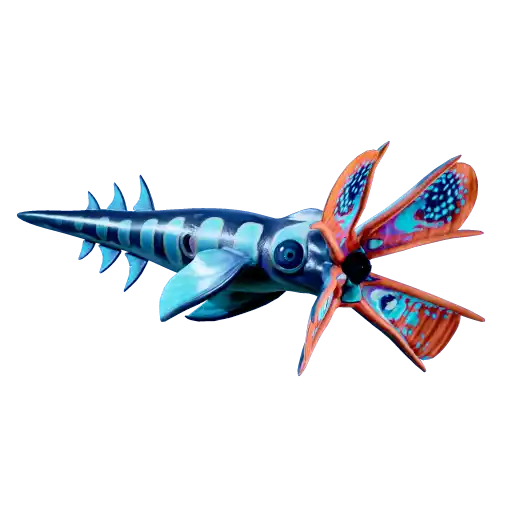
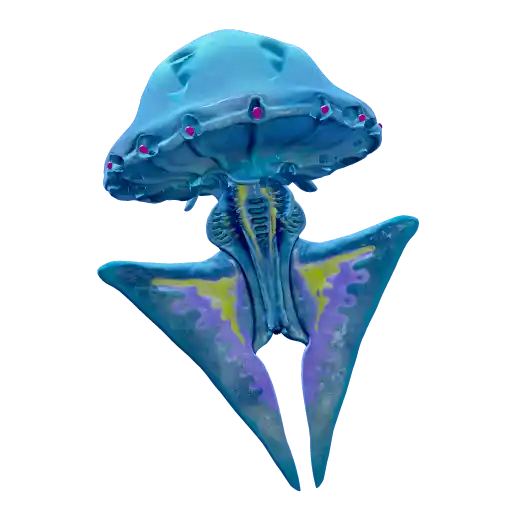
| Glowstick | Personal | Organically derived light source. |
| Gold | Resources | Au. Element 79. Useful in corrosion-resistant electronics. |
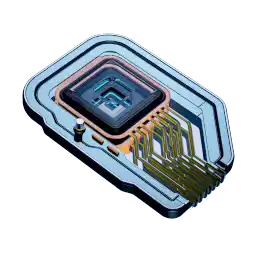
| Gold Finder | Bio Lab | When close to gold, highlight any gold that is near |
| Gold Ingot | Resources | Solid mass of gold for fabricator machining. Nearly inert in seawater: excellent for insulating wires and plating surfaces. |
| Gold Node | Nodes | Gold (Au), element 79.
Shares many properties with copper and silver.
Highly conductive and ductile. Can form atom-thin wires. Critical for corrosion-resistant electronics, especially in humid environmnents.
Also useful for shielding spacesuits and spacecraft against heat.
Rare—tends to sink to the core of planets during formation. If you cannot access the core of the planet, search for surface deposits formed by bacterial accumulation. |
| Grease | Resources | Fatty soap and mineral oil. Multiple applications. |
| Great Jaw | Bio Lab | — |
| Greeble | Base Building | Decorative base component. |
| Greeble Test | Base Building | — |
| Habitat Builder | Personal | Fabricates habitat compartments, appliances, and external facilities from raw materials. |
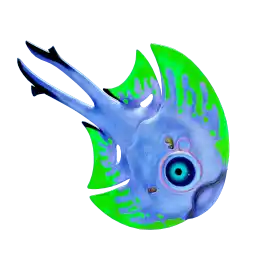
| Halfmoon | Creatures | *Moliform semiluna*. Edible forage fish. Peculiar nervous system. |
| Halfmoon | Bio Lab | — |
| Halfmoon Jerky | Sustenance | Intentionally prepared, human-digestible ration made at a fabricator. |
| Hammerhead | Creatures | Hammerhead (tentatively *Panoplia hammerhead*). An armored, herd-dwelling, territorial herbivore with a powerful ram.
1. Hammer head
Challenges intruders on its territory, especially other hammerheads. Displays its pectoral fins and closes its enamel head shield before attacking.
2. Jet propulsion
Spiracles behind the eyes feed into a jet channel with internal gills. The jet drives the hammerhead's sudden rams.
3. Large brain
Floats in a protective cyst. The central eye sees color, while two smaller motion-sensitive eyes guide ramming.
4. Grazing jaw
The muscular vertical jaw suggests a diet of sponges, kelps, tunicates, and possibly crushed coral. The need to protect a grazing area may have evolved the hammerhead's territoriality.
5. Practice behavior?
Hammerheads ram coral domes. The adaptive benefit is unclear—perhaps toughening their shields.
Advise caution, especially when piloting vehicles. May have social cognition comparable to Earth’s ungulates, some of which were extremely dangerous to humans. Ramming areas (called leks) are a major source of ocean noise. |
| Hammerhead | Bio Lab | — |
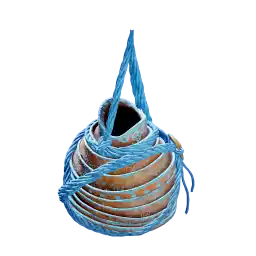
| Hanging Tailing Jar | Base Building | Storage container |
| Harvestmoon | Creatures | *Moliform semiluna* subspecies or morph. |
| Heat Resistance | Bio Lab | On enter heat gain Mild Heat Resistance |
| Heat Resistance Chip | Personal | Biosuit upgrade module.
Prevents damage from extreme high temperatures in the "Level 1" range. |
| Heavy Gills | Bio Lab | Consume less oxygen while swimming in currents. |
| Hemophiliac | Bio Lab | When damaged you take an additional 2 health loss every second for 10s. 30s cooldown |
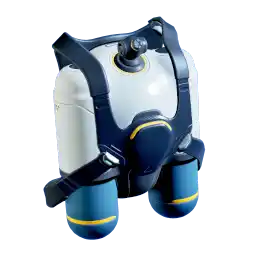
| High Capacity Air Tank | Personal | Expanded air supply for longer dives. |
| High Capacity Deployable Locker | Personal | High capacity deployable locker: a watertight storage enclosure that remains fixed in position. |
| Homing Sense | Bio Lab | Detect nearby bases with electrical power |
| Hot Cave Base Camp | Investigations | A checkpoint for expeditions into the geothermal cave below.
-On-site NoA node could be reactivated for data retrieval
A cluster of blackboxes in the cave suggest it is lethally dangerous. |
| Houndgar | Creatures | Squid-like hunter that works alongside the Marrowbreach. |
| Houndgar | Bio Lab | — |
| Hoverthorn | Bio Lab | — |
| Hycean | Creatures | *Hycean hycean*, a remarkable flying predator named for planets that mix a hydrogen sky and a water ocean.
1. Gasbag flyer
Though descended from the same squidlike ancestor as the houndgar and other Protean teuthis, the hycean's mantle is full of buoyant hydrogen. The ancestral hycean probably stored ammonia for buoyancy, like many Earth squid. The hycean uses bacterial symbiotes to convert this ammonia into carbon nitride, which, when exposed to sunlight, splits seawater into oxygen and hydrogen lifting gas.
2. Predatory fisher
Free of most predators, the hycean drifts above the sea surface and snags prey with its arms. The larger a hycean's gasbag, the more food it can afford to lift and digest. Large prey can be suffocated by holding them clear of the water until their gills dry out. The sails provide steerage in the wind, and can be flapped for emergency power.
3. Flammability risk
Any spark may ignite the hycean's gas bag, with disastrous results. Hyceans are acutely sensitive to electromagnetic activity, and may be forced to shelter in the water during thunderstorms.
4. Philosophical musings
The buena vista hypothesis (proposed by Malcolm McIver) argues that advanced cognition could only evolve when Earth fish began to raise their eyes above water, allowing them to see far enough to require long-range behavioral planning. If this hypothesis is credited, then the hycean — as one of the only discovered Protean species that lives outside water — may be unusually intelligent.
Recommendation: avoid areas beneath hyceans. Monitor for signs of high-level behavior, such as 'fertilizing' certain areas of the ocean with defecated waste. |
| Hydroelectric Turbine | Base Building | Generates power when placed inside a natural current. Requires power transmission device. Cannot be placed in an artificial current |
| Hyper Mitochondria | Bio Lab | Regenerate health when losing hunger |
| Hypnotize | Bio Lab | Stun creatures on stop |
| Improved Fins | Personal | High-end fins with lightweight fiber construction and adaptive flexion. Fin fast, fin far. |
| Invisible | Bio Lab | Become invisible to creatures for a while after stopping |
| Invisible Dash | Bio Lab | Become invisible to creatures for a while after dashing |
| Iso | Investigations | Iso asphyxiated after being abducted by alien organisms.
Iso was carrying an upgraded scanner. Retrieving its blueprints could allow a modification station to replicate it. |
| Isotonic Water | Sustenance | Water infused with sugar and salt concentrations matching the default Alterra bodyprint. |
| Jellied Legs | Bio Lab | Swim 25% slower for 8s after submerging. 30s cooldown |
| Jellies | Creatures | A simple animal, closely related to corals, characterized by a symmetrical body and trailing arms. Usually grows in a stalked form (called the polyp) before detaching into a free-swimming form called the medusa. Some jellies remain stalked their whole lives.
Mixotrophs—most are predatory, but some obtain nutrients from photosynthesis or symbiotic photosynthesizers.
Nerve net—jellies predate the evolution of a nerve cord in the tunics.
Complex—some jellies on this world have achieved a size and complexity unknown on Earth. Evolutionary origins unknown.
Earth analog: jellies. |
| Jelly Ring | Creatures | Jelly ring (tentatively *Thermodont sufganiyah*, heat eating jelly donut). Not a jelly, but full of jelly. Feeds on the heat and chemical flux of hydrothermal vents.
1. Pyrosome
A colony of tiny clone animals called zooids. Unlike solitary tunicates (like the lucifer rotsac), these zooid tunicates work together to build a larger structure.
2. Ring
The jelly ring settles around hydrothermal vents like a wheel on an axle. When a vent dies, the jelly can migrate to a new vent by swimming.
3. Mucus baskets
Flowerlike structures around the ring are mucus-lined pumps for water and hydrothermal vent flux. The pumps can be reversed to serve as swimming thrusters. They also serve as exchange sites for organisms feeding on the ring's interior jelly.
4. Inner jelly
The inner toroid circulates hot, mineral-rich water pulled in by the mucus baskets. Specialized zooids digest feedwater (using symbiotic bacteria) into a latex-like sap. This jelly coagulates on contact with water, plugging holes in the ring. It is rich with complex chemistry, including sugars, starches, oils and gums.
5. Bioluminescence
The zooids in the jelly ring communicate with light, rather than nerve cells. The ring is strongly bioluminescent and will react to stimuli.
6. Jellyfall
Earthly jellies and pyrosomes die and fall to the sea floor, fertilizing the deeps with nutrients. Strangely, there are signs that living jelly rings travel to deep sites and expel their jelly—giving up their calories for no apparent benefit. Natural selection cannot produce behaviors which hurt the individual to help the ecosystem. (Alterra ecology experts consider theories of multi-level selection obfuscatory and counterproductive.) This may be a farming behavior, or a donation to unknown relatives on the seafloor.
Assessment: may be a source of complex chemistry and even edible fats or sugars if tapped. Likely flammable in air. |
| Jeto Caris | Creatures | Jetocaris (tentatively *Tripod phrontiscaris*). A three-legged social crustacean that displays parenting behavior.
1. Tripod body plan
Due to early evolution of bilateral symmetry, no three-legged organisms exist on Earth. The jetocaris’ legs may have formed from the fusion of six earlier legs, three on each side. The small forelimbs remained independent.
2. Leg jets
Evolving from leg-mounted gills, a valved thruster on each leg allows the jetocaris to hover and swim. Fusing the legs to double the size of each gill-thruster improves efficiency in simulations.
3. Feeding tongues
The jetocaris deploys two long, flexible radulae (perhaps evolved from food-handling maxillipeds) to search for food. The forelimbs clean and groom the radulae. These appendages are sensitive, but capable of regeneration. This suggests the jetocaris can regrow its nerves—and something in the seabed likes to bite them.
4. Parenting behavior
The jetocaris carries and protects juveniles of the same species, and its expressive body language suggests a dense social life. Spectrogenetic analysis indicates that some juveniles are adopted—they are not genetic offspring of the carer. Adoption has been observed in many species: though it is a mistake from a rational adaptive standpoint. It may be a sign of instinctive behavior. Or perhaps the jetocaris once lived in eusocial groups, with a single reproductive queen producing young that were tended by workers.
Assessment: mostly harmless. May provide emotional benefits. |
| Just Keep Swimming Poster | Base Building | Decorative Poster |
| Karakorum Power Plant | Investigations | An enormous Axum power plant. Named 'Karakorum' by pioneers.
-Originally powered by hot water from the titan rockbore below
-Later modified to burn methane
-Destroyed by sabotage
-Could be repaired and reconnected to the rockbore to generate Axum power
-Startup procedure will require translating Axum language
Repairs will require an upgraded scanner and enormous quantities of raw material. |
| Keep Calm Poster | Base Building | A poster that research has shown provides levity to weary pioneers. |
| Lab Chair | Base Building | A stiff seat that intentionally forgoes comfort to keep you focused on work. |
| Lead | Resources | Pb. Element 82. Heaviest stable element. Slow neurotoxin. |
| Lead (Deposit) | Deposits | Lead (Pb, element 82).
A dense metal and the heaviest stable element. Found in many ores.
Useful in construction alloys, ballast, radiation shielding, and some very large batteries.
Due to this world’s high metallicity, lead plays an unknown but significant role in the biosphere. All indigenous organisms and water sources are tainted with lead.
Lead can mimic other metals involved in human biology, replacing them in critical reactions. It is a devastating toxin. Long term exposure requires urgent chelation therapy. Take any possible steps to remove lead from your food and water supply.
The presence of organolead compounds in the biosphere of Rakshasa played a major role in the breakdown of the expedition and the renewal of the Obraxis Principle. |
| Lead Node | Nodes | Lead (Pb, element 82).
A dense metal and the heaviest stable element. Found in many ores.
Useful in construction alloys, ballast, radiation shielding, and some very large batteries.
Due to this world’s high metallicity, lead plays an unknown but significant role in the biosphere. All indigenous organisms and water sources are tainted with lead.
Lead can mimic other metals involved in human biology, replacing them in critical reactions. It is a devastating toxin. Long term exposure requires urgent chelation therapy. Take any possible steps to remove lead from your food and water supply.
The presence of organolead compounds in the biosphere of Rakshasa played a major role in the breakdown of the expedition and the renewal of the Obraxis Principle. |
| Lightstick | Personal | Deployable LED light source. |
| Lit Lamp | Bio Lab | Emit Light On Stop |