| Slow-twitch Optimization | Bio Lab | Consume food and water 50% slower |
| Small Axum Jar | Base Building | Ornate decorative jar. |
| Small Coral Jar | Base Building | Decorative jar made from organic material |
| Small Stomach | Bio Lab | Your maximum hunger value is decreased by 25. |
| Snorkeling | Bio Lab | Reduce oxygen use while swimming near the surface |
| So Hungry | Bio Lab | You consume food at double the rate. |
| Solar Panel | Base Building | Generates energy from sunlight. Reduced output at night or in deep water. |
| Sonic Echo | Bio Lab | Emit a sonar pulse to highlight nearby resources |
| Sonic Resonator | Personal | Industrial phased-array sound amplifier used in mining and other applications. |
| SP - Clamily | Biomes | — |
| Spiney Tail | Creatures | Edible though insubstantial fish. Difficult to grip due to its unique electromagnetic propulsion. |
| Spotlight | Base Building | Produces a very bright light to provide pioneers with a sense of safety. |
| Standard Air Tank | Personal | Holds breathing air. Standard All Environment Respiration design. |
| Stilt Orb | Organic | — |
| Stool | Base Building | A simple utilitarian stool. |
| Storage Cache | Base Building | Medium storage container for personal use. 20 Storage slots. |
| Strike Armor | General | Added strike plates greatly reduce incoming physical damage from attacks or collisions. |
| Strong Acid | Resources | Concentrated acid, very dangerous. Used as a metal cleaner and catalyst for fabricating advanced electronics. |
| Strontium | Resources | Refined from Celestine. Radioactive element used in Radioisotope Thermoelectric Generators (or RTGs) and other nuclear applications. |
| Sugar of Saturn | Sustenance | Locally synthesized sugar alternative. Neurotoxicity within 2 standard deviations of median local sustenance. |
| Suit Gills | Bio Lab | When your oxygen gets below 30 you regenerate O2 at a rate of 5/s for 5s. 60s cooldown |
| Sulfur | Resources | S. Element 16. Useful precursor for strong acids. |
| Sulfur Deposit | Deposits | — |
| Sulfur Loose | Loose | Sulfur (S), element 16. A highly reactive nonmetal useful for chemistry, especially the production of acids, and an essential element for life.
Historically known as brimstone, with applications in medication and fertilizer.
Some organisms use sulfur in their metabolism, even in the absence of oxygen. These sulfur-reducing organisms can form the base of a food web in deep sea habitats.
Assessment: search for elemental sulfur deposits near thermal vents or volcanic activity. |
| Super coral | Organic | — |
| Surge Jelly | Creatures | Surge jelly (tentatively Staurobrachia capacitor). Large, complex jelly that hunts with electric shocks.
1. Single animal
Unlike colonial organisms such as the Portuguese man'o'war, the surge jelly is a single animal with specialized tissues—far *more* specialized and complex than Earth jellies. Proposed class name: staurobrachia (pole arms).
2. Complex internal structure
Outer bell ringed with sense organs called rhopalia. A nerve net coordinates the bell's motions to swim and seek prey. The visible inner structure is the gut.
3. Feeding structure
The jelly retains its stalk — a remnant of its growth in a stack of clones. The stalk draws in nutrients for the gut.
4. Charged fins
Two rigid fins contain wirelike electrocytes, likely a development of ancestral tentacles. These organs build voltage to stun or kill prey. Measured power ranges from 400 to 1000 volts at 1 ampere: enough to kill a human.
5. Peculiar passengers
Traces of radioactivity, high-temperature waxes and sulfuric acid imply contact with a hydrothermal vent. Composition of the jelly's tissues suggest origins in the deep ocean.
6. Former domestics?
Jellies in close proximity communicate through their electric fields. Whether jellies have individual names or a grammatical language is purely speculative, but some patterns may be trained or learned—even passed down through generations of jellies.
Assessment: minor danger in close contact. Fascinating research prospect from a distance. |
| Surge Jelly | Bio Lab | — |
| Survival Multitool | Personal | Standard issue pioneer tool for harvesting tougher materials. |
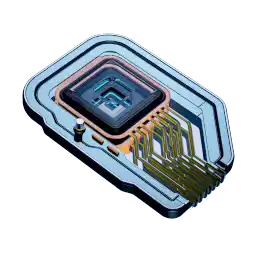
| System Chip | Resources | A self contained system-on-a-chip built around a microcontroller. Compact, energy-efficient mobile computer. |
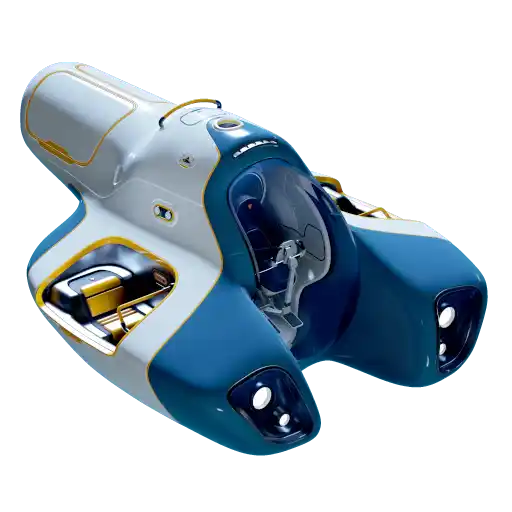
| Tadpole | General | Core module for "Tadpole" vehicular mobility and manipulation suite. |
| Tadpole Depth Module Mk. 1 | General | Structural health monitoring allows the Tadpole to dive deeper before structural damage. Multiple modules do not stack. |
| Tadpole Depth Module Mk. 2 | General | Adaptive alloys counteract hull pressure, allowing the Tadpole to dive even deeper before structural damage. Multiple modules do not stack. |
| Tadpole Haul Chassis | General | Dockable passenger and cargo chassis for the Tadpole. |
| Tadpole Pens | Investigations | A fabrication and maintenance site for Tadpole submersibles. There is a functioning NoA node in the control room.
-Site suggests Tadpoles were often deployed eastward
-Material may have been returned by Tadpole expeditions
-NoA node may contain information on past survival failures and future threats
-Access to the control room is secured by a passcode
Access codes were stored in the PDAs and blackboxes of high-ranking colonists. |
| Tailing Barrel | Base Building | Decorative barrel |
| Tailing Chest | Base Building | A large storage chest. Commonly used by inhabitants of Proteus. Can be constructed in water. |
| Tailing Jar | Base Building | Storage container |
| Tailing Rug | Base Building | Decorative rug |
| Tailing Table | Base Building | A table constucted of scrap |
| Tailings Village | Investigations | A group of nonhuman structures above a hot, geologically active cave.
-Constructed from salvage and basic crafted materials
-Hot cave may have provided food or energy
-Apparently abandoned
First contact with a tool-using alien species carries significant risk to the individual pioneer and to humanity. |
| Tall Axum Jar | Base Building | Ornate decorative jar. |
| Tallshroom | Organic | *Hyphen tallshroom*. A mysterious, chitinous life form with no clear terrestrial analog.
1. Hyphen
Hyphens are colonies of hard-shelled hecaspids: shell-making algae. (Algae on this world descended from a star-like 'solarian' cell, while all animal life descended from an elongated 'polarian' cell.) Hecaspids in the colony align their shells into a column, forming tough armored threads, or hyphae. On Earth hyphae are characteristic of fungi, but it is not clear if an analogous group exists on this world.
2. Tallshroom
The tallshroom is a complex organism with differentiated organs, but all its structures are fundamentally threadlike — hyphenated — and constructed of tough biopolymer akin to chitin. Gill-like structures along the flanks collect oxygen and chemistry from the water, fruiting bodies disperse reproductive cells, and the central body forms a sealed 'wellhead'.
3. Armored driller
Tallshrooms drill their hyphae into the rock below, cracking open their own hydrothermal vents. The body captures the outflow of this vent, where bacteria convert minerals into energy. If the outflow becomes too hot or rapid, the tallshroom's drumlike top blows open, releasing the catastrophic overflow.
4. Viral history
Like the mammalian placenta, the tallshroom's hyphae evolved in an explosion of retroviral inserts. These viral proteins are expressed in the tips of the drill fibers. Hyphae may have originally evolved as viral predators—inserting a symbiotic virus into armored life forms by growing on and cracking through their bodies.
5. Cousins
Despite millions of years of evolutionary separation, the tallshroom shares elements of its body plan with the false fission drum *Polymephycite tympanum*, a fellow member of clade Scyllidae. It is unknown whether this represents convergent evolution, mimicry, or a viral gene transfer.
Assessment: indicator of new evolutionary pathways unique to this world.
|
| Tealcycloplet | Nodes | — |
| Technological Sensitivity | Bio Lab | Detect nearby human technology |
| Temperature Reprieve | Bio Lab | Do not consume oxygen in extreme temperature |
| Test A | Bio Lab | Test Description A |
| Test B | Bio Lab | Test Description B |
| Thermal Plant | Base Building | Converts heat into usable power. Excellent for the Zezuran desert. Requires power transmission device. |
| Threat Sense | Bio Lab | Detect nearby threats with specialized hair cells |
| Threemoon Temaki | Sustenance | Intentionally prepared, human-digestible ration made at a fabricator. |