


Subnautica 2 All Items
Add to Favorites
Ongoing Refinement: We are continuously updating the database throughout the Early Access period. Some icons and descriptions may be placeholders as the game evolves.
Subnautica 2 All Items Database List
| Type | Description | ||
|---|---|---|---|
 | Biosampling Kit | Resources | Single use tool. Acquires biomods from local life. May lead to lucrative biopatent profit sharing. |
 | Bioscanner | Personal | Modified survival tool. Analyzes Axum technology and Protean biology to generate alien blueprints and biomods. |
 | Black Hoverthorn | Creatures | Edible though insubstantial fish. Difficult to grip due to its unique electromagnetic propulsion. |
 | blight node | Organic | — |
 | Bluemoon | Creatures | *Moliform semiluna* subspecies or morph. Blue. |
| Box of Holding | Personal | A box that holds fabrication overflows. Interact to take the items. |
 | Bulb Floor Lamp | Base Building | A crude attempt at form and function. |
 | Bullethead | Creatures | *Panopliateuthis velos*, the armored squid dart. A swarm predator that attacks by ramming and penetrating its prey. Capable of *Caught script hook in allocated memory for command >> generate-databank "Bullethead" >> echo \memory-carve -signature=0xSEABEEF5 >> restore-databank* "I saw their eyes first. Bright yellow eyes, down the inside of the lava tube. I killed the motors and the floods, signaled Iso and Mel to grab the handholds, and held my breath. For a minute I thought we'd ride clean through. Then the current pulled the Tadpole into an outcrop and at the sound they all just—went off. Like bottle rockets. Back and forth, up and down, everywhere. One of them lodged in the port hull just aft of the canopy and I saw, very clearly, that it was a squid, completely plated in armor. They hit you tail first, hard enough to punch into titanium. Incredible. Do you think they run on compressed air? Or do they burn something? The hull alarm went off — I tried to blink the floods to confuse them — but Mel and Iso's blackboxes were already crying. The noise seemed to attract them. Apparently they like to get stuck in wounded prey and wait until you bleed to death, then go to work on your carcass. So by the time I got back to Habitat there wasn't much left of Iso and Mel for Iso and Mel to recycle." —Tsewangiin "Ruby" Anar, "When I Didn't Die" |
| Bullethead | Bio Lab | — |
 | Cage Gorgon | Nodes | *Rotsac cherimoya*. A tunicate-like animal which collects alcohol from decaying matter to produce a creamy, flavorful mucus. 1. Cherimoya Named for its resemblance to the terrestrial cherimoya fruit (or custard apple). It can be eaten whole or sucked on through a straw; the exterior tunic is soft but the heart, nervous system, and other organs should be spat out. The rotsac contains mercury sulfide, which will eventually accumulate to dangerous levels in the human body. 2. Peculiar metabolism As a rough inverse of the lucifer rotsac, the cherimoya rotsac converts alcohols to sugars rather than decomposing sugars to alcohols. The cherimoya achieves this with a chemical pathway that does not occur on Earth. Aqueous cinnabar provides a source of mercury to oxidize alcohols into simple sugars. The cherimoya has no other behaviors: it simply stores sugars as it grows into a taut, full adult. 3. Symbiotic partner Because of its plentiful stored sugars, the cherimoya is a common symbiotic partner for organisms like the cage gorgon. 4. Enteric reproduction The cherimoya rotsac is gonochoric — either male or female. However, it does not release eggs or sperm into the seawater. Instead, its reproductive cells are eaten by organisms feeding on the cherimoya. They seek out other cherimoya rotsacs' gametes in the digestive tract of the host. The fertilized embryos are then expelled by the host organism, providing them with nutritious waste to bootstrap their growth. Assessment: edible. Your digestive tract may briefly become pregnant. |
 | Camouflage | Bio Lab | Become invisible to predators while not moving |
| Camp One | Investigations | A partially disassembled and flooded corridor network. -Human remains in the sediment suggest it was a failed habitat. -Basic architecture suggest that the builders were working with a limited set of blueprints -Signs of more recent rehabitation, with a larger blueprint set |
 | Cavitation Muffler | General | Reduces the noise of the Tadpole, making it less likely to attract unwanted attention. |
 | Celestine | Resources | Local source of radioactive Strontium. Burns brilliant red. |
| Celestine Deposits | Deposits | — |
| Celestine Nodes | Nodes | Celestine (strontium sulfate, SrSO4). A crystalline mineral and useful source of strontium. Celestine dissolves quickly in seawater, but certain microorganisms synthesize it as a shell or ballast. Local deposits must be the skeletons left by dead colonies of these organisms. The colonies may have overgrown on an artificial strontium source, then died off when the source was removed. Strontium (Sr), element 38, is a soft and highly reactive metal with applications in radiothermal power generation. Strontium on this planet contains elevated levels of Strontium-90, a highly radioactive, bone-seeking isotope which poses a long-term health risk to human colonists. Strontium-90 is only produced in nuclear fission reactions. Assessment: do not ingest. |
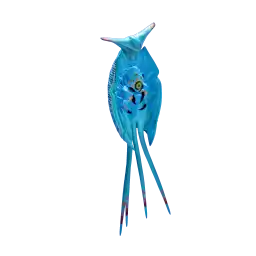 | Cerathecan | Creatures | *Caught script hook in allocated memory for command >> generate-databank "Cerathecan" >> echo \memory-carve -signature=0xSEABEEF5 >> restore-databank* "Our PDAs point to organisms like the cerathecan and exclaim 'behold: the road not taken'. On Earth, seed shrimp are tiny slime-dwellers; on Proteus they grow huge. But just as easy life in our decontaminated bases deafens us to the call of Proteus, easy analogies blind us to the truth. The map from Earth is not only wrong, so is its basic dogma. Evolution does not follow roads here." —Anita Gottschall, *The Way Away Home* *Exile cerathecan*, the horn-cupped exile. A mysterious carnivore and deposit feeder with no clear Earth analog except the tiny ostracod (seed shrimp). 1. Exile A crustacean hidden in an upright, double-valved shell, similar to an oyster or clam. The crustacean pilots the shell through a central eye and periscopic ears, and feeds with a cluster of basal tentacles. A thruster in the shell's hinge (a region called the umbo) propels it forward. 2. Behavior and diet The cerathecan grazes on the seafloor, plucking detritus and prey from hiding places. To protect the cerathecan's body from struggling prey, the interior of the shell is lined with a paralytic neurotoxin. The cerathecan's shell muscles are themselves paralyzed by this toxin — it cannot open without secreting an antidote. 3. Perplexing genetics There are no genes in the cerathecan's genome to produce a shell. Genetically, the cerathecan is simply a large shrimp. The shell tissues contain a partial genome, without organs to sustain an independent life. Further investigation required. Assessment: cryptic origins. The inner shell can be sampled for chemistry when it opens to feed. |
| CG - Anemone Hills | Biomes | — |
| CG - Blighted Coral | Biomes | — |
| CG - Graveyard | Biomes | — |
| CG - Leadzone | Biomes | — |
| CG - North Raceway | Biomes | — |
| CG - Plateaus | Biomes | — |
| CG - Shallows | Biomes | — |
| CG - South Raceway | Biomes | — |
| CG - Tufa Towers | Biomes | — |
| Chap | Investigations | Colony surgeon Sophie Boucher helped computational dynamicist Chap Sovann reprint into a new body. -This planet is toxic to humans, but Sophie believed reprinting could slow the toxicity -The colonists used special biobeds to improve their dexterity and endurance Locate these biobeds to improve your toolbelt and inventory maximum. |
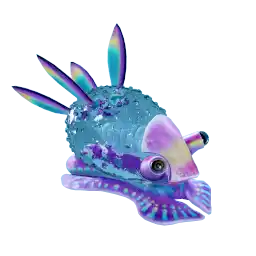 | Charismatic Slime | Resources | Similar to a syncytial slime mold. |
 | CHBC Live Poster | Base Building | CHBC Live Commemoration Poster |
 | Cherimoya Chutney | Sustenance | Intentionally prepared, human-digestible ration made at a fabricator. |
 | Cherimoya Rotsac | Sustenance | Full of sweet fluid. Resembles a cherimoya fruit. Edible, with some spitting. |
| Cherimoya Rotsac | Miscellaneous | Full of sweet fluid. Resembles a cherimoya fruit. Edible, with some spitting. |
| Cherimoya Rotsac Fruit | Organic | — |
 | Chitin Layer | Bio Lab | Take half damage from hostile lifeforms |
 | Chum Cloud | Bio Lab | Release a cloud of delicious bait to distract predators |
| Cicada Wreck (Canteen) | Investigations | A fragment of an AISV Cicada lander module, broken into two segments. Originally a deployable colony structure, including a canteen for relaxation and refreshment. -Although pumped out and used as a worksite in the past, the canteen has flooded again -Corrosion and weathering make it difficult to determine whether this lander deployed safely from the Cicada, or broke away violently |
| Cicada Wreck (Empty Hold) | Investigations | A fragment of a cargo hold from an AISV Cicada lander module. Most of its cargo was either removed or expelled. -Corrosion and weathering make it difficult to determine whether this lander deployed safely from the Cicada, or broke away violently |
| Cicada Wreck (EVA Prep) | Investigations | A large fragment of an AISV Cicada compartment, including an EVA suit locker for spaceborne construction. -The presence of a compartment from the Cicada itself (rather than a lander module) suggests the ship may have broken apart violently -Corrosion and weathering make it difficult to determine the exact circumstances of the fragment's arrival -Tool marks indicate partial salvage has been attempted, but the tools are not of Alterra manufacture -Acoustics indicate fragments of useful tools are present |
| Cicada Wreck (Lander Garage) | Investigations | A fragment of wreckage from an AISV Cicada lander module, including a large garage. -Corrosion and weathering make it difficult to determine whether this lander deployed safely from the Cicada, or broke away violently -Garage was opened after landing so any surviving vehicles could sortie |
| Cicada Wreck (Stairway to Heaven) | Investigations | A fragment of an AISV Cicada compartment, including a descending emergency stairwell. -The presence of a compartment from the Cicada itself (rather than a lander module) suggests the ship may have broken apart violently -Seawater sampling detects a source of bloom virus beneath the fragment A juvenile angel comb may have been trapped beneath the wreckage. |
| Cicada Wreck (Therapy Room) | Investigations | A fragment of an AISV Cicada compartment, originally intended for atmospheric therapy. -The presence of a compartment from the Cicada itself (rather than a lander module) suggests the ship may have broken apart violently -Salvage work here was interrupted by violence -Acoustics indicate fragments of useful tools are present |
| Climate Lab Complete | Main Story | Continue self-directed exploration and colony development. Decrement your DEBT. Risk code: sierra, andros, warrant-6. |
 | Collector Leviathan | Creatures | Enormous cephalopod predator (tentatively *Tyrannoteuthis phobocoeus*, tyrant squid of fearful curiosity). Feeds on hard-shelled, heavily defended prey. Solitary but highly intelligent. Likely a deep-sea creature. 1. Squidlike body plan The collector's body converges with Earth squid — a long mantle and several limbs attached directly to the head. The mantle is covered in plastic armor. Unlike Earth squid, the collector has four long hunting tentacles with dextrous claws. Its eight arms are small and grouped around the beak. 2. Powerful thruster Two large spiracles feed a rear-facing thruster. These spiracles are separate from the four gills openings on the head, allowing the collector to separate its breath rate from its thrust speed. Two secondary hearts pump blood from the gills to the main heart. 3. Hard prey An enormous beak (capable of tearing through plate titanium) and four dextrous tentacles tipped with sharp bioglass claws imply that the collector specializes in prying or tearing open heavily armored prey. Possible prey fauna include the coral crab and great jaw. The need to defeat armored, active prey may have evolved a curious and aggressive psychology. 4. Broadcast organ This huge, many-chambered organ is a biological phased-array sonar. Multiple 'speakers' and 'ears' allow the collector to broadcast complex multi-part pulses. Dense innervation connects this organ to the toroidal brain; patterns of bioluminescence may be direct reflections of the collector's brain activity. 5. W-shaped pupil In bright light the pupil creases into a W. This trait was present in Earth cephalopods, but its function was not determined before the Holocene collapse. 6. Abyssal gigantism Organisms from the deep sea are often very large, a phenomenon known as 'abyssal gigantism'. Assessment: hunters with varied and difficult diets are likely to be intelligent and inquisitive, and a predator's curiosity may appear to prey as arbitrary torture. Any small submersible or habitat is likely to draw the collector's interest. |
| Collector Leviathan | Bio Lab | — |
| CollectorLeviathanRegion | Biomes | — |
| Colonist Bunker (Anita's Garden) | Investigations | A remote habitat with several long-term biological experiments testing the growth conditions of Protean life. -Contains a biobed rigged to upgrade colonists' bodies (license violations have disabled the bed's ability to reprint lost colonists) -Biobed set to analyze changes in a patient's genetics and gene expression -Biobed recorded at least one death caused by a cytokine storm, a reaction to failed gene therapy The experiments in the habitat were initiated by colony purser Anita Gottschall. |
| Colonist Bunker (Nahema's Lab) | Investigations | A remote habitat used as a biological and ecological laboratory. -Contains a biobed rigged to upgrade colonists' bodies (license violations have disabled the bed's ability to reprint lost colonists) -Biobed repeatedly referred a patient for mental health assessment focused on dysthymia complicated by anxiety The habitat's metadata has been destroyed by crude software intrusion. Chemical traces indicate it was used to handle explosives in addition to its scientific functions. |
| Colonist Bunker (Quaker's Meetinghouse) | Investigations | A remote habitat used as a meeting ground and miscellaneous workspace. -Contains a biobed rigged to upgrade colonists' bodies (license violations have disabled the bed's ability to reprint lost colonists) -Biobed recorded a time-series analysis of changes in a patient's genetics and gene expression -Records include observation of nearby crab species and conversations with other colonists Metadata suggests the habitat belonged to chaplain-psychiatrist and AI ethicist Lucretia "Quaker" Kapoor. |
| Colonist Bunker (Salvage) | Investigations | A habitat buried below the center of the coral gardens biome. May have supported salvage operations in nearby, although its depth makes quick access inconvenient. -Contains a biobed rigged to upgrade colonists' bodies -Due to violations of the terms of use, the biobed's ability to reprint lost colonists has been disabled Metadata suggests it was constructed by Zygimantis "Mantis" Tarvydas. It may have served as a personal retreat as well as a worksite. |
| Colonist Bunker (Sophie's Retreat) | Investigations | A remote habitat on the edge of the jelly barrens in the northwest of the coral gardens biome. -Contains a biobed rigged to upgrade colonists' bodies (license violations have disabled the bed's ability to reprint lost colonists) -Biobed records indicate that it printed colonist PC/R-DMIK9-SB.02 more than twenty times Records stored on site were signed by Sophie "Butcher" Boucher, colony surgeon. She may have used this site for medical research. |
Showing 51 - 100 of 492
Page 2 of 10
- More pages